


 Apple Podcasts

 Spotify

 YouTube

 Amazon Music
Episode #561: Running for Life-Tony Reed on Health, Community, and Breaking Barriers in Distance Running
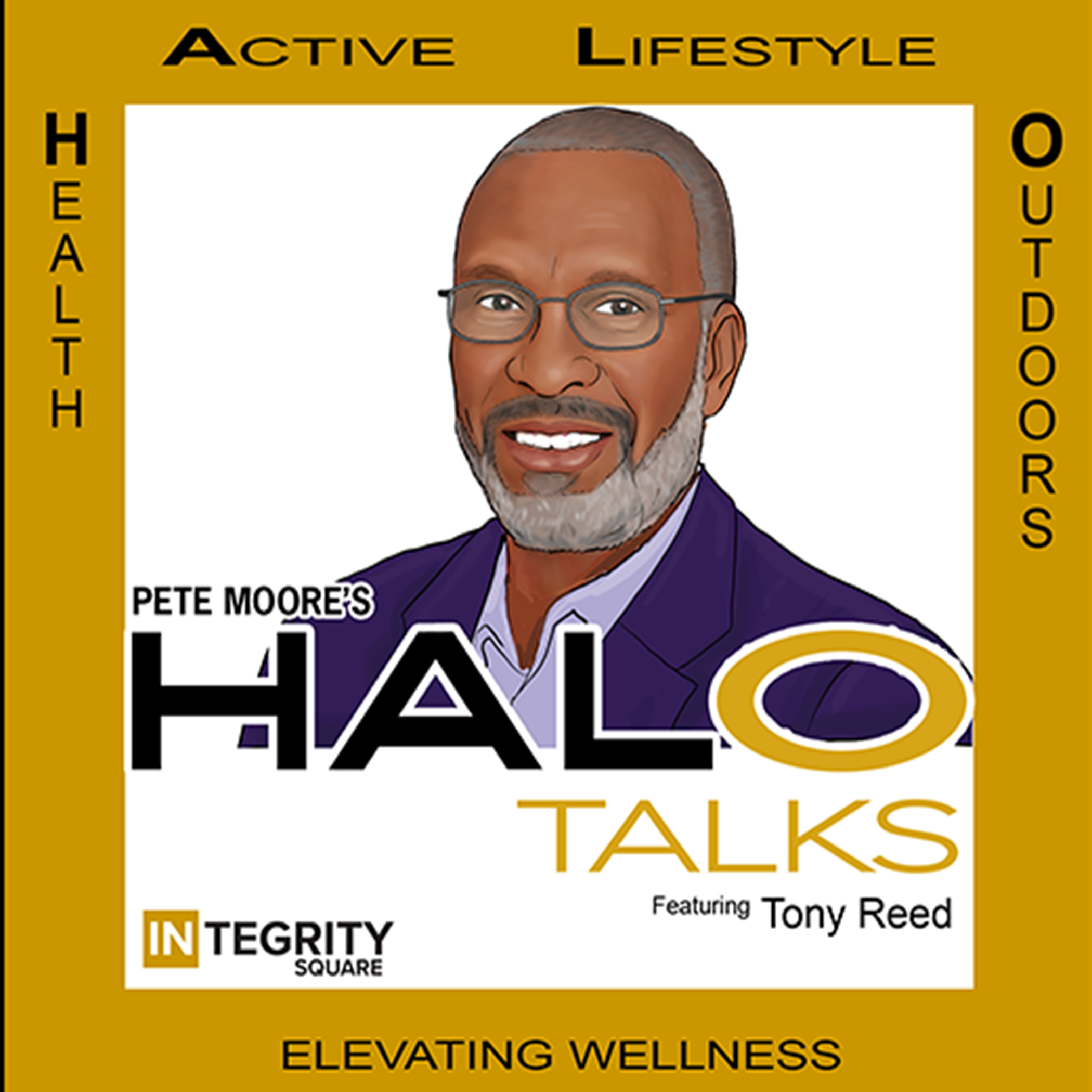
On this episode of HALO Talks, host Pete Moore sits down with Tony Reed—a longtime marathoner, accomplished CPA, grandfather, and passionate advocate for healthier communities. Tony shares his journey that initially began with a childhood diagnosis of pre-diabetes and grew into a lifelong commitment to fitness. He discusses how running not only changed his own life, helping him avoid diabetes, and chronic disease, but also inspired him to support others, particularly within the African American community, through education and community-building.
Tony details the beginning of the National Black Marathoners Association, the myths they aim to dispel, and the training and sustainability programs they've launched over the past 20 years. He also talked about the organization's impact—including producing documentaries and creating a nationwide network of running clubs—and offers solid advice for anyone looking to balance a demanding career with a purpose-driven mission. Whether you're a runner, a club owner, or an advocate for healthier, more inclusive communities, Tony's story and insights are absolutely worth your time!
When it comes to starting up clubs, Reed states, "We've encouraged our members to get their coaching certifications either through the Roadrunners Club of America or USA Track and Field. Then once they get their certifications, for example, they could partner with a health club, and within that health club, they can actually have a distance running club."
Key themes discussed
- Diabetes prevention and health through running.
- Overcoming myths about African Americans in distance running.
- Founding and mission of Black Marathoners Association.
- Importance of education, training, and sustainability.
- Partnerships with health clubs and coaches.
- Inspirational stories and role models in running.
A few key takeaways:
1. Personal Health Journey as a Catalyst
Tony was pre-diabetic as a child and was told he'd likely need insulin as a teen. Instead, through consistent physical activity, inspired by mandatory sports in school and Dr. Kenneth Cooper's book "Aerobics," Tony committed to a lifelong goal—averaging three miles a day. Decades later, he's run over 51,000 miles and never needed insulin.
2. Turning Personal Motivation into Community Impact
Tony's health transformation and running achievements led him to create a formal organization aimed at getting African Americans more involved in distance running. Sparked by community interest when he neared his 50th marathon, he turned his personal discipline into a mission and movement, focusing on education, training, and sustainability.
3. Dispelling Myths and Creating Representation
One of the association's core pillars is education: Challenging the myths that African Americans are only sprinters and not suited to distance running. Tony and his organization have produced documentaries to showcase role models and share inspirational stories within the community.
4. Building Partnerships and Running Communities
The organization actively encourages members to get certified as running coaches and set up local running clubs—sometimes in partnership with health clubs. They provide role models, resource sharing, and opportunities to affiliate local clubs with the wider movement, enhancing retention and engagement in health clubs by helping members train toward collective race goals.
5. Impact and Legacy
Tony's organization is a non-profit with free membership and has directly or indirectly influenced over a quarter million African Americans to get active. Celebrating its 20th anniversary, the association continues to grow, foster community, and provide platforms (like their annual summit) for sharing ideas and expanding their impact.
Resources:
- Tony Reed: https://www.linkedin.com/in/anthonyreedcpa/
- National Black Marathoners Association: www.BlackMarathoners.org
- Prospect Wizard: https://www.theprospectwizard.com
- Promotion Vault: http://www.promotionvault.com
- HigherDose: http://www.higherdose.com
0:00 I am super excited to announce that we now have a formal partnership with the Prospect Wizard. And when I say wizard, I mean wizard. Obviously you have a website. This allows you to convert your website traffic visitors directly into leads. It's not just another chatbot and it's not AI but it allows a visitor to call, text or leave a voicemail immediately. Goes to you, your sales team or anyone else in the club instantly. MIT shows a study that if you contact the league within 10 minutes, chance of them converting goes up nine times. That of the average. We got the Atlanta clubs on it. Vita Fitness, Gold's Gym, Mountainside City Fitness, Philly, College Park. Become one of the next halo companies to deploy the Wizard.
0:48 It's easy to use. Go to the prospectwizard.com get a free 30 day trial. Talk to my boy Dave Gallon. He will get you all set up and let the leads flow based on the Wizard. Go get him. This is Pete Moore on Helo Talks nyc. I have the pleasure of bringing a longtime distinguished marathoner, a very adept CPA and a grandfather who lets his grandkids use all of his awards and medals. Coming to you live from Dallas, Texas, Tony Reed. Welcome to the show. Thank you very much for having me. It's great being here. Awesome. Well, as we talked earlier, you know, you and I are on a parallel path, mission to get people moving, get people running, try to make sure that we don't get them into the pharmaceutical industry, which they'll never get out of, and take, take a little bit more control and responsibility for themselves. So you know, maybe harking back to, to, to how you started running back in the 70s and you know how this kind of became something that you're like, look, I got to take control, I got to do this. Yes. Well, I was about 7 or 8 years old when they found out that I was pre diabetic and the doctor said that I would probably go on insulin by the time I was a teenager.
2:09 So every year I was having to go to the Juvenile Diabetes association to get tested to determine whether or not I would go on ins. I went to a high school where it was mandatory, not optional, but mandatory. Every student had to participate in a sport two out of the three seasons and that third season they had to take pe. So I ended up going to high school, got involved in sports, lost weight, did not have to go on insulin, but we really didn't understand why. Then in college again it was mandatory that you take pen. And there I read the book called aerobics by Dr. Kenneth Cooper.
2:49 And then later, he wrote the book New Aerobics. And in New Aerobics, there was one paragraph that said diabetics who were dependent on insulin could either decrease their intake or go completely off of it if they maintain a fitness program. So in 1976, I set a lifetime goal of averaging what I would say. Running, walling, running, walking or crawling, three miles a day. I've kept handwritten running journals since 1979, and as of this year, I've run over 51,000 miles average, exactly 3.07 miles a day.
3:30 I'll be 70 this year, and I'm still not on insulin. Amazing. Congratulations. I had a. I had a story that I got to interject here, because I probably was. Was in that same code of potentially having diabetes. Wasn't a kid, but I wasn't tested for it. But I'll tell you what happened, and you tell me if I was probably at risk. So back. I grew up in Long island and about 30 minutes outside New York, and it was a suburban area. So the ice cream man would have that jingle and come around up my block, you know, every five or six days a week. And my dad ran a company. He was. Always had a lot of change, like quarters and dimes and nickels. I don't know why, but he. He'd always empty out his. His pockets, you know, the. The next when he came home. And there was this nice little, like, bin of, like, quarters. It was like a blue thing maybe my grandmother made. It was, like, embroidered. And I'm like, hey, can I just, you know, take out of there if I need something? He's like, yeah, sure. I don't care. So the ice cream man would come. I would literally take my left hand. I'd grab as much as I could in quarters. And when the ice cream man came, I would buy Fun Dip, which is basically like sugar in a little pouch, right, with the applicator. Then I would buy Big League Chew Grape, which was basically like, all sugar with. With gum. And then I would buy candy, cigarettes, and I would take them all and I put them under my radiator.
4:46 And then when my mom says, okay, you gotta go to sleep, I basically eat all that stuff like 30 minutes before I slept. So I was on a huge sugar rush at, like 10, 11, 12. And the result of that was I got chubby and I had to shop. I don't know if you had this where you grew up in St. Louis, but there was Sears, you know, S, E, A, R S. And. And they had this is before, like mental health awareness, Tony. They had a section of the kids section called the husky department. Husky. I had to go there and get elastic corduroy jeans. Okay. And it was the most demoralizing thing that you could do when you got elastic jeans is 10, 11, 12. So I became a goalie in soccer because I didn't want to run because I was eating too much sugar at night and somehow I didn't get diabetes and I leaned out and I was actually a good athlete. But know you can either get diabetes genetically or you could actually like force feed it to yourself. Which might have been what I did. Yes. Well, when I was in high school, I worked every weekend at a barbecue restaurant and there was a Bill, sorry, there was a cook whose name was Bill.
5:53 And Bill wore a patch over one of his eyes and it turns out he had to wear that patch due to glaucoma. So he had lost sight in that eye due to glaucoma. And over about a six year period he had his toes amputated, his leg amputated, and ultimately lost his life. All due to complications associated with diabetes. And I don't even think he was probably in his, probably mid to late 40s. Wow. Wow. And I decided, you know, that I wanted to live long enough to see my grandkids, maybe to walk my daughter down the aisle when she got married and really just to do all these things that I couldn't do them if I was dead. Yeah. Amazing.
6:34 So, so when did you actually say like there's some people say, hey, I'm part of a movement, you know, I want to help other people that are doing this. And there's some people like you, me, and you know, the, the, the type AERs that say I'm not just going to like get involved. Like I'm actually going to create an entity. I'm actually going to drive this thing. It's going to be a legal thing. I'm going to like devote a certain amount of time. Obviously you do a marathons, which is a significant amount of time allocation. You also have a day job, your cpa, which isn't like back in the day, like we people don't remember. Like there was no Excel, there was no like online QuickBooks. Like you had to do this stuff like on a general ledger, right? Yeah. And like, like big lengthy pieces of paper. No one appreciates what it used to be to actually get work done as far as I'm concerned. So beta CPA back in the day, by the way, was not moving files around Microsoft Outlook for the listeners here, it was actually very detailed, you know, ledger work, probably pen and paper at some point, maybe moved up. So what, what kind of.
7:32 What was the inertia to say? Was it to cook or was it like, hey, I just got to set up an association like formalizes. Well, I was, in 2001, I was speaking at a data processing conference up in Chicago. And while I was there, I mentioned that I had a goal of running 50 marathons before I turned 50 years old. And I had run by then something like 47 marathons. And I really wasn't thinking anything of it because I was just out there running the marathons by myself, at least going to races by myself. And a group of African Americans pulled me aside after I got off the stage and they said, we've never met anyone who has ever run that many marathons. And so they said, when you get ready to run your 50th, let us know.
8:18 And in talking with all of them, all of them had somewhat similar stories as far as having family members who have diabetes, people suffering from high blood pressure, hypertension, as I like to call all of the diseases of inactivity. So when I got ready to run my 50th marathon, they came and joined me and we started talking about, you know, about possibly starting an organization that would focus on African Americans to get us up and moving. And what I ended up doing is putting together kind of a three part program, if you want to call it that, focus on education, training and sustainability. So the education side of it focuses on dispelling the myths about African Americans as distance runners. Because for a lot of us, when we were in school, as soon as you said you wanted to run a mile, you know, people say, well, you know, well, African Americans are sprinters, not distance runners.
9:20 Even, even with, like back in the day when you had like the New York Marathon or the Boston Marathon, it would. Like some of the guys that are winning now, like, they weren't coming to the US to do that. Right. Or the Olympics. How'd it work? Well, the. The guys that were winning the marathons were coming over from Africa. Yeah, yeah. So they were doing long distance. Right. So when you look at African Americans. Yeah, we were all focused on. At least coaches were focusing us on running the sprints. Yeah, I got you. Okay. And if you were a distance runner, they would just go to the track, run a few laps around, and, you know, that was your workout. Gotcha, Gotcha. Okay. So there's. There's this huge myth that African Americans are Sprinters and not distance runners. Okay. And of course, there were also things about women running as far as the uterus, which we're going to drop out, and all these different things, and how running is bad for your knees, it's bad for your hips.
10:16 So the education side of our program focused on dispelling all those myths. Today we actually have two documentaries. Oh, really? Yes. And I actually wrote and directed both of them. One of them is called Spare Time. Yes. Love it. So one of the documentaries is called Breaking 3 Trailblazing African American Women Marathoners. And that documentary came out in 2022. In 2023, Runner's World magazine listed it as one of the most motivational and inspirational running documentaries of all time. Amazing. Where can people get that?
10:56 That's available on just about all the different streaming services. It's out on YouTube Prime Video. So, yeah, that one is out there every place. Amazing. The second one that just came out this year is called We Are Distance Runners. Untold Stories of African American Athletes. So that one focused on six distance runners who ran distances everywhere from the half mile all the way up to running across the. Literally the running from LA to New York, and talks about their stories of overcoming poverty, the. The naysayers, and just all the different obstacles that. That we have, including major illnesses.
11:47 This is Pete Moore. I want to let you in on a little secret. There's this company called Promotion Vault. And what they do is they give. Out rewards from retailers that allow you to incentivize your members without having to do 0 down and 1 month free or giving away shakes or giving away T shirts. What you want to do is build a rewards program that lasts, that people value and that doesn't discount your own products and services. So here's the deal. There's something called Rewards Vault. The Rewards Vault is going to allow a member to set up their own profile. They are going to answer questions, you are going to get those answers, you're going to be able to target those members, and you're going to reward them inside your club, inside your spa, and outside of the club and outside of the spa to get them to become loyal, to get them to pay their monthly dues and to be rewarded properly for the actions. A lot of companies are cutting back on rewards. You shouldn't be Promotion vaults. Your answer, trust me, this is real.
12:52 A couple questions for you related to what you're doing right now is you're trying to, you know, encourage people to get moving, encourage people to, you know, register into marathons, maybe create you know, communities or groups, what level? And, and the reason why I'm asking this question is, like, you could take this into so many different. You could go really deep on what you're doing, or you can say, like, hey, there's like a directory. You. Here's all the events you could go to. There could be potential partnerships as people listening to our call right now with groups that have a reasonably sized African American population either already inside of their health club membership base or that they don't have. And they should actually have a relationship, whether it's a Gold's Gym, whether it's an Equinox, whether it's a Barry's Poot camp. What are some of the things? Or is there anyone inside the company that's looking for bricks and mortar partnerships or marketing partners? Because I think that's where we can be helpful. And also, it's very hard for health club members to get above this. 20% of the population, maybe 30% now belong to a health club chain. And maybe, you know, having connectivity with a group like yours kind of makes it easier because they have a goal that they're walking into.
14:03 Okay, well, good. That actually gets into the. The second, second part of our program, and that's focuses on training. So one of the things that we've done is we've encouraged our members to get their coaching certifications either through the Roadrunners Club of America or USA Track and Field. Then once they get their certifications, for example, they could partner with a health club, and within that health club, they can actually have a distance running club. And they can always meet up there at the facilities to start to start their different training runs and kind of start off with what we call a couch to 5K training program. Gotcha.
14:45 And those programs are on your site. And then you can maybe like, have them linked into a health club chain or they could like, take it and like, reference the source. Well, once a person gets their certified coaches training, for example, especially with the Road Runners Club of America, they work with them on putting together training programs for individuals who want to kind of start a running program, because it's really different for everyone. Got it. So a standpoint of actually, like, setting up communities. I was on a rant the other day with one of our health club operators who had very high attrition rates, and they're losing like half their members a year. And I'm like, what's going on? I got some people, like, are leaving because they. They play pickleball.
15:29 We don't have a pickleball court. Some people are leaving because you know, our indoor cycling is not what it used to be or, and allows people want outdoor cycling anyway. They're just here to like do. And I'm like, if you take back to like college there are all these like student led activity groups, right? None of those were like, there was no, there was nobody from the school that like said, I'm like, hey, I'm in the, I'm the Runners club. The Runners club is you know, somebody who's like a senior, you know, in college. And then people joined and then they, you know, selected and it was, it was 100%, you know, student led. And what I've been trying to get these health club members to say is like look, you don't have to have a pickleball court, have like two people that are, that are pickleball advocates and, and, and play every week and just like say hey, you want to play pickleball? We don't have pickleball. However, I got four workout recovery sessions a week pre and post pickleball that I'm going to make you better at pickleball and then talk to Joe and Sally because they were on the pickleball team and gave us shirts, right. So I feel like there's like a wide open lane, if you will, for you to say, okay, I'm going to take my association. I'm going to either you find someone inside that club that's a, that's a runner and affiliate with you to say, hey, I'm run, I'm ahead of the, you know, I'm ahead of the Runners club here, right? And you know the, the NBN MA is, is we got MBMA affiliate or like what is it in, in like a ro.
16:55 Ro, like in the army, right? Rotc. They got a ROTC on campus type of thing. Hey, I've got a, I've got. Our group is inside. These health clubs can be super interesting as I'm thinking aloud. Yeah, well with us we actually don't have clubs in different cities around the country because we feel on a local basis they know what's best for their community. Now what health clubs can do is once they get a running club started, the way they keep things going is they can pick for example a race just about once a quarter that they want everyone to train towards, you know, to train towards that particular race. So they may start off the first race, maybe a 5k, a 10k, a half marathon and then maybe even up to a marathon and then what they would do to get the People to come to the health club is one of the most important parts about distance running is strength training and stretching.
17:51 So if the running. So if the health club, they may not have a lot of treadmills, but people can again start and finish their runs there. And on their off days they can say, yeah, I need to go in, I need to work on my quads, I need to work on my calves, I need to build up my upper body strength. Yep. And that's where they could get, take advantage of all the facilities that are there at the health club. Yeah, agree. So just to, to, to close out this, this idea. If there is a running club that is already inside of a health club that we get to through our relationships, they don't have a relationship with you and your association, what would your association provide to them that would optimize what they're currently doing?
18:34 Well, the thing that we can provide are role models so that you can go and you can look at the individuals, for example, who have been inducted into our hall of Fame. You have a lady there named Lisa Felder. So Lisa Felder at one point weighed over 230 pounds. She changed her exercise habits, she changed her eating habits, and she ended up losing all the weight. And Lisa Felder went on to run over 400 marathons and ultra marathons. So here you're looking at races that are over 50 miles. And so you can hold her up as a role model. You have again, a lot of different people in there who come from a lot of different backgrounds that if you can take, if anyone says that they have a problem in a particular area, we can find someone in our hall of Fame who had the same problem and who overcame it and excelled at distance running. Got it.
19:34 Is that sortable database or like, can you put in, is it like tagged, meta tag or anything? Yeah, all they have to do is just go to our website, which is blackmarathoners.org we have a drop down link for hall of Fame and you can see all the different individuals that have been inducted into the hall of Fame as well as the background stories. Awesome, awesome. And with the association, are you a nonprofit like 501c3 and do you take donations in? That's a very good question. We are a nonprofit organization. It is free to join. So people can't use a lack of a membership. People can't use a membership fee as a reason not to join. Right. Because our sole mission is to get people out there running and to get them active. So how many people do you think. You'Ve affected or since you started.
20:27 Wow. We have over 16,000. For example, in our Facebook group, we have founders of running other running organizations, used to be members of our organization. And just kind of taking it that one step out, we have impacted well over a quarter million African Americans in this country. Bravo, man. Man, hats off. That's awesome. I love hearing that. I think sometimes people want to build something really big and they forgot that you should start small and figure out what you're doing, how it resonates. And as an analogy, like, somebody will start up, like one health club, and then they'll build 10, but they don't really know what they built yet. And they would come to us and say, like, you know, with a CPA like yourself, be like, hey, I need to raise money. I want to build another hundred. And I'll say, which one's the prototype? And they would say, the 11th one. And I'm like, wrong answer, man. You got to come to me after you've lived in it, after you figured it out, after you tell me it works. And then like, that experiment, you know, could turn into something big, and you need capital to fund the experiment. So it sounds like from your standpoint, you're like, hey, how can I affect people locally? And then let it, like, blossom and control it and figure out where it goes, you know, down this, down the highway, Right? On a. On a marathon. I'm running a marathon. You weren't running. You were never running a sprint with this. I guess is another way to say it. Yeah. And what we do is we provide. We provide a platform at our annual summits where we
21:59 can get individuals from running clubs all around the country to congregate together and encourage them to share ideas and concepts about how to go about making their running clubs larger and how to go about better servicing their local communities. When's the next summit? The next summit, believe it or not, is this weekend coming up. It's going to be at the One City Marathon race weekend in Newport News, Virginia. Oh, good for you. And in fact, we're actually going to be screening both of the documentaries there. And it's free. And again, it's free for people to go and watch the documentaries.
22:39 This is Pete Moore. Here's the last tip for you of the podcast. We are partnered up with a company called higher dose higherdose.com they are the leader in workout recovery products, infrared technology, LED light masks, neck enhancers, and other products such as PEMF mats and sauna blankets. If you have not gotten on the workout Recovery train yet your time and your stop is now. You got to get these products in there before these workout recovery and spas end up saturating your market. Having your members walk out of the club and going into one of their locations for 200 bucks per month where they're paying 39 to you. Let's become an expert in workout recovery. If we are already an authority in workouts, higher dose, check it out. There's a wholesale code and we look forward to helping you augment your products and services to meet the demands of your members. And hey, let's get people happy, healthy and sweating. And the recovery should be just as good as the workout.
23:50 So. So in closing here, if you had advice for your younger self or if you had advice for, know, somebody who's coming out of undergrad or coming out of business school and they want to, you know, have a career and they also want to help people, is there anything that you would say I should have done a little bit differently or like, you know, maybe like a couple words of wisdom from a guy's got already grandkids and thousands of awards behind him. That's not a screen share tool. I would say be very realistic. You know, you're not going to be able to, to do everything at one time, so it's just a matter of pacing yourself. You know, think as they say, think in terms of what's good for the long run.
24:35 I like that. And also resting is just as important as running. Awesome. Man. I'm glad we met. I'm not sure how we met, but welcome to the halo sector officially. I'd love to be helpful to you guys as much as possible with getting into some of the more traditional bricks and mortar groups that have everything that you need, but don't really know that your association is out there or that there are communities and pockets of people that they need to market to and they need to embrace because once you, once you move into lifestyle, it's not like you don't, you don't exit out like you're in, you know, you're in for the long term. So, so yeah, this year is our 20 year anniversary. So we've been doing this for a long time. That's great. That's great. And that's, that's coming up this weekend, like in two days. Important news. Yes.
25:26 Okay. I won't get the podcast out before then, but have a great trip and journey and we'll hit you up when we post this up and see how we can make some high level connections. Okay. Great it's been. Thank. Thank you for having me. Yeah. And feel free to use the term halo if you don't like the word wellness. If you see wellness coming out, you can just take it back in, get a good nose, breathe as you do on your marathon. On. And like, you know, mile 22, be like, oh, I'm in halo sector. Okay. All right, man. Awesome.
26:12 Sa.