


 Apple Podcasts

 Spotify

 YouTube

 Amazon Music
Episode #620: Why Preparation and Legal Expertise Make or Break HALO Sector Deals with Mike Zaino from ICE Miller

Key Takeaways
- Thoroughly organizing corporate documents, clean ownership records, and addressing minority shareholder or landlord consents upfront is critical to prevent M&A deals from falling apart.
- Integrated, full-service legal teams like ICE Miller add essential value by combining corporate, IP, litigation, and regulatory expertise with real-world commercial perspective.
- Top legal advisors balance commercial reality with legal risk probabilities, tailoring advice to match the client's business goals and risk tolerance rather than relying on overly rigid legalisms.
- Sellers in HALO sector transactions must understand that representations, warranties, and holdback escrows are standard tools used by buyers to ensure financial security and verify business status.
- While AI and automated tools can assist with drafting and consistency checks, they cannot replace the professional judgment and deal sense of experienced legal counsel.
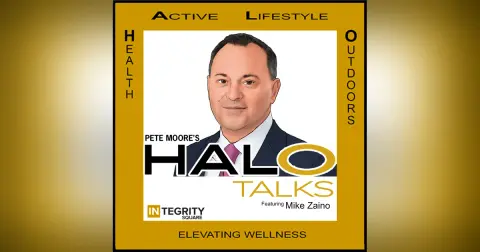
Welcome to another episode of HALO Talks, where Pete Moore sits down with Mike Zaino, the seasoned legal consigliere behind countless deals in the health, active lifestyle, and outdoor sector. With over 25 years in private equity law and currently at the helm of the New York corporate practice at ICE Miller, Mike has weathered every twist of the dealmaking rollercoaster with a deep bench of legal expertise and a commercial mindset that prioritizes real-world business outcomes.
In this episode, Pete Moore and Zaino get deep into the legal landmines and practical considerations that can make or break a successful M&A transaction. They get real about intellectual property pitfalls, the headaches of product liability, and the critical importance of prepping documents, assignments, and shareholder agreements ahead of a deal. You'll hear battle weary, hard-won advice on dealing with less experienced attorneys, the escalator of reps and warranties, the nuts and bolts of escrow, and the increased use of AI in M&A transactions.
When it comes to escrow alternatives for larger deals, Mike states, "You'll have a rep and warranty insurance policy that functions the same way, except there's no holdback. The escrow, the insurance company, you get all your $10, $20, or $30 million, and then the insurance policy will stand behind those claims."
If you're aiming to scale, attract capital, or position for a successful exit in the HALO sector, this episode is your wake-up call. When it comes to deals, you need a team that can "play chess, not checkers" as Pete often says. This episode is a must-listen and is full of actionable insights, cautionary tales, and a no-nonsense approach to winning in today's market.
Key themes discussed
- Legal complexities in private equity and M&A deals
- Importance of intellectual property and product liability due diligence
- Pre-deal document preparation and seller readiness
- Navigating inexperienced or non-specialist opposing counsel
- Reps, warranties, escrows, and indemnity mechanics
- The evolving role of AI in legal transactions
- Strategic, commercial, and practical legal advice value
A Few Key Takeaways
1. The Importance of Diligence and Preparation in Deals: A recurring theme was that successful transactions hinge on having thoroughly organized corporate documents, clean ownership records, up-to-date franchise agreements, and a clear understanding of consents needed from minority shareholders or landlords. Numerous deals have fallen apart due to a lack of upfront diligence, underscoring that proactive cleanup and preparation smooth the transaction process and can make or break a deal 06:08.
2. Integrated, Full-Service Legal Teams Add Value: Having access to a deep legal bench (corporate, IP, litigation, regulatory, etc.) is vital, particularly for complex transactions or in sectors with product liability or specialized IP issues. Firms like ICE Miller provide not just legal but also commercial perspectives, pulling in specialists as needed. This multidisciplinary approach simply cannot be replicated by solo practitioners, especially as deal sophistication increases 03:32.
3. Balance Commercial Realities with Legal Risks: Top legal advisors take a practical, business-minded approach. Mike emphasized framing advice in terms of risk probabilities, client tolerance, and commercial reality rather than being overly legalistic. This helps clients make educated decisions, focus on what matters for getting the deal closed, and ignore negligible risks that aren't material drivers 12:07.
4. Reps, Warranties, and Escrow. Know What You're Signing Up For: Many sellers are surprised at the scope and duration of reps and warranties they're required to make, as well as their financial exposure via holdbacks or escrows. Zaino clarified that these are standard tools for buyers to ensure they are getting what they paid for, and claims (if made) are typically capped at a negotiated portion (often 10–20%) of the purchase price. In larger deals, insurance can replace escrow, but that also comes at a cost 16:15.
5. AI is a Tool, Not a Substitute for Experience: While AI and automated tools can aid in drafting, proofreading, or flagging provision inconsistencies, they're not yet replacements for experienced legal or financial counsel. The real value comes from professional judgment and deal sense that software cannot yet replicate, especially in complex or nuanced negotiations 24:06.
Resources:
- ICE Miller: https://www.icemiller.com
- Mike Zaino: https://www.icemiller.com/michael-zaino
- Integrity Square: https://www.integritysq.com
- Prospect Wizard: https://www.theprospectwizard.com
- Promotion Vault: https://www.promotionvault.com
- HigherDose: https://www.higherdose.com
Sponsors:
- Thank you to the legal firm of ICE Miller for their sponsorship of this episode. Built on a foundation of legal service more than a century long, Ice Miller remains committed to helping our clients stay ahead in a changing world. Our more than 350 lawyers and legal professionals are dedicated to developing a deep understanding of each client's needs to help them build, grow, and protect their most valued assets.
Frequently Asked Questions
What is the role of representations and warranties in M&A deals?
Representations and warranties are detailed statements made by a seller about every aspect of their business, such as financials, compliance, and asset ownership, which let the buyer know the true status of what they are purchasing.
How do escrows work in a business acquisition?
In an escrow arrangement, a negotiated portion of the purchase price (typically 5% to 20%) is held back in a third-party or law firm account for 12 to 18 months to provide financial recourse for the buyer if any representations or warranties prove to be incorrect.
Why is pre-deal document preparation important for sellers?
Proactive cleanup of corporate books, ownership records, and lease agreements prevents costly deal delays and ensures that founders can actually deliver the required assets and consents to a buyer.
At what deal size do rep and warranty insurance policies typically replace escrows?
While seen in deals starting around $10 to $15 million, rep and warranty insurance policies frequently replace traditional holdback escrows in transactions north of $20 to $30 million.
0:01 This is Pete Moore on Halo Talks NYC. I have the pleasure of bringing to his first podcast with Integrity Square my attorney, corporate attorney. I like to call myself Captain Halo. We got Captain America here, and now we're going to talk to Captain Zano, who is the head of my legal, uh, outsourced team that works on any deal that we can get our client to agree to get him on. So So, Zena, welcome to your Halo Talks podcast. Thanks. Thanks, Peter. I appreciate it. So you and I have been working together for 10 years, and I like to say that every deal is a roller coaster ride. So fasten your seatbelt. And I like the fact that you're in the copilot seat. Give a little background on yourself personally and then a brief commentary on Ice Miller, and then we'll get into some deal takeaways. Yeah. So I've been an attorney for 25 years in the private equity world.
0:56 That entire time. I haven't practiced all 25 years, as you know, Pete. I had a brief stint outside the law, but have been working on private equity deals for 25 years. Ice Miller's a national firm. We have 350 lawyers. We're full service. We cover everything. I'm in the New York office predominantly here. We do business transactions. So a lot of formation of companies, new companies, and funding and financing those companies with equity and debt. And then, acquisitions and sales of companies. So, you know, it's sort of the private equity world, the private transactions world, and all flavors, as you know. Yeah. So we brought you in on several transactions. One was with a, I'd say like a late-stage venture deal on a consumer product side.
1:47 Yep. And Halo, you know, recovery products. If we start talking about that deal, to start. Some of the things that we were concerned about before we made the investment was intellectual property, whether they have any or not, what you do about patent or infringements. Also, what kind of liability there might be on things like an infrared sauna and electromagnetic fields and things like that. Product liability. Product liability. So, talk about how your team how you approach these types of things, not just from a legal standpoint, but from a commercial standpoint. And then what else does Ice Miller— or like when you say like, hey, this might be a little bit outside of my domain, what other resources are you able to pull? Versus, as an example, I'm working on a deal right now that was supposed to close a month ago— no, sorry, 2 months ago.
2:44 Um, and it's a sole practitioner who's not as available, um, nor does he have any bench. Right. to kind of pull info from. So cover, you know, some components of that. So we obviously have a deep bench, right? Our corporate practice here just in New York has over 25 lawyers. Across the firm, it's over 100 lawyers who are doing some sort of corporate transactional work like what we're discussing here. And that's obviously partners and associates. Outside of that, You raise product liability. We have litigators and insurance folks who understand how to manage those risks. You mentioned IP. We also have a big IP group that would look at things like trademarks or patents. Those are definitely a source of work when you're looking at a transaction. A lot of smaller companies, the IP may be If there's a patent or trademark, it's sometimes filed in the name of the founder and not the name of the company, and there's things like that. On those investments you're referencing, Pete, we would always want to make sure that whatever IP is supposed to be in the company is actually in the company and there are no claims of a founder who says, I invented that technology, or, I was the first one to use that name, and that they try to claim ownership of it for whatever reason. You want to just make sure that everything is inside that entity that you're putting your money into, right? Our money is going in this
4:14 entity and all of the assets of the business should be in that same entity or in that entity structure. Those are some of the key— that's the one thing we always see. Then, how enforceable are those patents, trademarks? Who else might be using something similar? Things like that that we'll do some diligence around depending on how important it is and how complex it is. For that technical stuff, we will always bring in our specialists. We have IP specialists, patent specialists, trademark specialists, copyright specialists who will look at the company's intellectual property. If there's product liability, depending on what it is, we could bring in— whether it's a regulated product or an unregulated product, we can bring people in to look at that too, mostly from our D.C. office. We do have 12 offices around the country, regulatory folks in D.C., etc.
5:13 You know, it's part of the full service. And we do deals, you know, from very small to very big. So, you know, we can't solo practitioner any of these deals. They're just not— yeah, they don't lend themselves to that. Yeah. So if we talk about some of the deals, or some of the deals that Integrity Square has worked on that have not closed, some of the reasons why they have not closed, I would say, is because the seller's documents, um, were not in order and when we ended up sharing them with a buyer without doing the upfront work of maybe correcting them or getting amendments on lease assignment transfers or going through some of the franchise agreements that they had signed and amendments. How much work do you want to force a client or highly advise them to do upfront before just Putting shit up in a Dropbox. Yeah, I mean, it's a great question. Certainly from a commercial perspective, we always advise clients to do as much as you can to like clean up your books and records, make sure you've got, you know, that your earnings are what you think they are and that you're presenting them properly. And on the legal perspective, there's a lot of that same thing too. So you may need to make sure that ownership is correctly documented so you're not getting into ownership fights. As the deal progresses, that's always a sore point when someone's been promised 5% of a company or what have you, and it's not properly documented. That's definitely one. There's always some cleanup, some corporate cleanup in these deals,
6:46 and that goes— that's true for little deals and big deals alike. Mm-hmm. There's always something you'll find. You just want to make sure it's not a major mess that you can't sell. The other thing where we really try to prep is understanding what consents are needed, right? If we have a minority shareholder who has consent over a transaction, or if we have lender— excuse me, landlords, if you've got multiple locations and you've got 3, 4, 5, 6 landlords, you're likely gonna need the consent of those landlords in many cases. And so, understanding what the relationship with the landlord is, what the rights are to assign and transfer that property, that can be a real sore point for getting some of these deals done, particularly where your buyer may ask for— Lease extensions. If you've got a lease that's got 2, 3, 4, 5 years left on it, they may want renewal rights, for example. Those are all things that we try to prepare for before engaging with buyers so that we know what we can deliver once we start those discussions. You don't want to be figuring out midway through a transaction what you can and can't deliver to a potential buyer or investor.
7:58 This is Pete Moore. I wanna let you in on a little secret. There's this company called Promotion Vault, and what they do is they give out rewards from retailers that allow you to incentivize your members without having to do zero down and one month free, or giving away shakes or giving away t-shirts. What you want to do is build a rewards program that lasts, that people value, and that doesn't discount your own products and services. So here's the deal. There's something called Rewards Vault. The Rewards Vault is going to allow a member to set up their own profile. They are going to answer questions. You are going to get those answers. You're going to be able to target those members and you're going to reward them inside your club, inside your spa, and outside of the club and outside of the spa to get them to become loyal, to get them to pay their monthly dues and to be rewarded properly. for the actions. A lot of companies are cutting back on rewards. You shouldn't be. Promotion Vault's your answer.
8:56 Trust me, this is real. When you take a look at, um, when you're working on a deal and the, the, the counterparty's, uh, attorney might not be, might not be an M&A specialist, or might— this might be like the first deal they've done. How do you either try and form a relationship with them and say like, hey, this is kind of commercial terms, like my client, we're not trying to like take advantage of you. Yeah. Like, this is what an escrow account is, this is how it works, these are reps and warranties that someone has to stand behind. What are some of the main things that you see as sticking points when you're working with maybe a less, you know, experienced attorney? And how often are those things maybe insurmountable at times where it's like the legal team kind of blew up the deal, unfortunately? Yeah. Yeah.
9:56 So first, we always try to establish a good relationship, whether they're super sophisticated M&A lawyers or solo practitioners who are generalists and are doing, you know, all kinds of different work and may not have expertise in M&A or or private transactions. But it's a great question, 'cause on the smaller end of the transactions, you do run into this quite a bit, and it can be quite difficult with an attorney who may not understand some basic concepts or terms or why we have structures that we have and how working capital escrows, I think you mentioned at one point, there's always a sore point in how to handle working capital is always a difficult one.
10:37 Yeah. when you have someone who's not experienced. And so, you know, we try to explain it to 'em. We just, we have to walk them through our rationale. I mean, we've done this, you know, countless times, so we know how to explain things in ways that either clients who aren't sophisticated in these deals or attorneys who aren't sophisticated can understand them. It may seem onerous at times, right? That's always the pushback is, oh my God, why do you need all of these things? And you've just gotta spend a little extra time explaining it to them. that these are generally customary and commercial terms and there's a reason for them.
11:17 You're just going to have to slog through that. We try never to have legal blow up a deal. The goal is, by the time we have an LOI signed, you've got a handshake with a buyer and a seller or an investor and a company. If we've been involved, hopefully, there's enough meat on those bones so that the legal process can go a lot smoother. I think tackling a lot of it upfront at that LOI stage is critical. I think one of the things why you and I work together on sequential deals is, and I always tell the potential client before we say, hey, let me get Zaino and Ice Miller involved, is that you're commercial, you get things done very efficiently, but also you're not telling them what to do. You're basically saying, look, here's my advice, here's the probability, and here's some of the potential cliffs that you might walk down, unfortunately, if you don't do this. But you've always kind of calibrated in every deal like, hey, here's what I would do and here's the risk of something happening. Yeah. So could you expand on how you— because I think you're unique from lawyers that we work with about like, yo, I'm looking at this as a business transaction. I'm not gonna like hang my hat on something that has a low probability. I actually understand the deal. And, and that kind of puts you in a different, you know, echelon in my mind. Yeah,
12:49 I appreciate that. Um, um, I think I'm a good lawyer, but you know, there's a lot of good lawyers out there. But I think, I think we try to— I definitely try to approach every transaction from a commercial perspective, right? Um, obviously each and every decision is ultimately the client's decision. It's not my company. It's not my money that's being invested, et cetera. So ultimately, the client has to sign off on all that stuff. You try to present it to them with, look, here's what I think will happen. Here's what I think your real risks are. Here's what I think are very remote risks. Then it's understanding from the client their tolerance. We had a deal maybe a year ago where a client thought there was going to be a lot of competition coming in and wanted to take some money off the table because he was afraid and he was willing to compromise in certain places that maybe we wouldn't always compromise. He thought he was getting a good deal, so go for it. Get the deal done and focus on the important thing and let some of the little things go to get what you need. what you ultimately want. You have to balance that.
14:02 It's born out of experience, but I've been on the other side, as you know too, right? I've done some private equity deals on my own and as an advisor in your shoes, and so I understand what it's like to get a lawyer who's just overly legal. Right. This is Pete Moore. Here's the last tip for you of the podcast. We are partnered up with a company called HigherDOSE, higherdose.com. They are the leader in workout recovery products, infrared technology, LED light masks, neck enhancers, and other products such as PEMF mats and sauna blankets.
14:46 If you have not gotten on the workout recovery train yet, Your time and your stop is now. You gotta get these products in there before these workout recovery and spas end up saturating your market, having your members walk outta the club and going into one of their locations for $200 per month where they're paying $39 to you. Let's become an expert in workout recovery if we are already an authority in workouts. HigherDOSE, check it out. There's a wholesale code. And we look forward to helping you augment your products and services to meet the demands of your members. And hey, let's get people happy, healthy, and sweating, and the recovery should be just as good as the workout.
15:35 You know, Mike, when you take a look at reps and warranties, which is something that the typical seller has probably never seen before, Yeah. And they say, you know, you're gonna be on the hook for X amount of years for financial statements, X amount of years for tax, and then, you know, potentially unlimited or statute of limitations on— or maybe no statute of limitations on fraud claims. Could you give us a little primer on what risks people are taking, what reps and warranties like really mean, and what is like fraud versus like what is like a error and omission that might be genuine?
16:15 Yeah. You're right. A lot of sellers on the lower end of the market may not be, or even higher end, may have never gone through the process of giving reps and warranties. Those are really just representations about every aspect of your business. You may get an agreement, to give people an idea, 10 or 15 pages of just representations about their business. That'll include fundamental things like, I own the business and I have the authority to sell the business, that kind of basic stuff. There's no liens. There's also very specific stuff about all the, you know, lots about employees and benefits, and is there any potential litigation and product liability and real estate reps, etc., about every aspect of the business. Very detailed. And what you're essentially doing is you're telling that buyer, that investor, this is the status of my business, okay? And so you're representing all of those things so that they know what they're buying.
17:12 The warranty part or the indemnification part comes after the deal closes. If those reps and warranties were incorrect, if they were innocently incorrect, it was just something you didn't know in your business or didn't think of at the moment, there could be liability there, right? You could have a buyer that very clearly says, listen, I bought it on a set of premises, on a set of representations. Those turned out to be incorrect, and they would seek a claim for that, okay? Generally, those claims are capped, you know, somewhere between 10% and 20%, generally speaking, sometimes as low as 5% on the lower deals. 5% of like 20% of the total purchase price? Yeah, sorry, of the total purchase price. So if you're selling for $10 million, you might have a cap of $2 million, right? Anywhere between $500,000 and $2 million would be normal.
18:05 You, as the seller, are standing behind those. You receive $10 million, you may have $2 million that is in a holdback or is in an escrow account that will sit there for 12 to 18 months, and so that if those representations and warranties turn out to be incorrect, the buyer has recourse to fund a claim. To explain this to the audience further, is that escrow. So if you— let's hypothetically, you got a $10 million deal and we've got a, uh, we got a 10% escrow. So basically the, the seller is getting $9 million and $1 million is sitting either at a law firm's escrow account or at a third-party bank. Yeah. And for the, uh, for the buyer and the seller, explain, if you will, on how a claim is basically made against the escrow and how that process works about trying to claim or recapture funds from an escrow. Yes. So most claims would just start with a written notice. You'd get a letter from the buyer saying, the purchase agreement says that you had a certain amount of inventory, or you represented that there was no litigation or there were no risks of whatever kind, that you operate in compliance with law, etc., they've got to set out in detail why they believe that representation is incorrect, and then to the extent they can, set forth a
19:36 dollar amount for the claim. Okay, that notice generally gets served to the escrow agent and to the seller, and like any claim, it's going to be negotiated back and forth. It may result in litigation, but until it is resolved That escrow agent is instructed to hold the money. So if it does go to litigation and take a couple years, that money's going to sit there until that claim is finally resolved. And, you know, claims do happen. They don't happen in every deal. They don't happen in the majority of the deals, anywhere near the majority of deals, but they do happen. And then in larger deals, I should mention, in larger deals, you know, we've seen it as low as $10, $15 million, but when you start getting above $20, $30 million, it's certainly north of $50 million, you're going to see a lot of deals where that indemnification goes away and it's replaced by an insurance policy. Right. You'll have a rep and warranty insurance policy that functions the same way, except there's no holdback. The escrow, the insurance company, you get all your $10 or $20 or $30 million, and then the insurance policy will stand behind those claims. Same process of making claims, but You're making claims against the policy, not against an escrow or pool of cash.
20:51 Right, but the seller might have to pay $250 grand or $500 grand for that escrow, for that insurance. Yeah, that policy gets— the cost of that gets negotiated, whether the buyer or seller pays for it. In larger deals, you're seeing buyers pay for it a lot more often. I'd say in the majority of those deals, buyers are paying for it, and they'll understand that that's an expense, a transaction expense. It's normally 25 to 50 basis points of the entire transaction. So in a, you know, in a $50 million deal, it might be— Let's just do 10. Let's use 10 for— Do 10. So it might be $250,000 to $500,000 of expense. I mean, it's gonna be a little higher on the low end because as a percentage, uh, it's just the way underwriting works. Yeah. So, so for the people that are listening here that, you know, get a $10 million offer, um, end up having $1 million in a, you know, JPMorgan or trust account that is at a nationally recognized bank, they'll say, well, what happens with that money? Is that being invested? And I get, you know, maybe I get $1,040,000 at the end of it. Do I just get the million out? Is that an invested pool of capital? It is sometimes invested. Remember that this is meant to serve as security. So if it's going to be invested, it's only going to be in things like short-term commercial paper. paper or short-term treasuries because no one wants the fluctuation,
22:22 particularly the fluctuation, potential fluctuation downwards. If there's meant to be $1 million there to protect the buyer, the buyer's not going to let you invest that in a stock or something that could go down. Understood. So yeah, you're going to lose a little bit of value on that money for a year. It's going to be invested pretty conservatively. Got it. And then from a standpoint of, you know, we can obviously talk for hours here, but, you know, this is a good primer for people to understand that there's a lot of complexity to deals and, you know, asset purchase agreements, stock purchase agreements, reps and warranties. Yeah. The one thing I wanted to ask you from a legal standpoint is with, you know, ChatGPT and Claude and all these other AI where people are getting an asset purchase agreement. I just had this happen the other day where a buyer— I'm sorry, a seller of a business decided not to hire his attorney, uploaded the asset purchase agreement from the buyer, put some recommended redline changes into it, uploaded it, then sent it back to the seller— Sent it back to the buyer. Signed the agreement.
23:34 It had some errors and omissions in there. And then they brought their attorney on at the 11th hour after they signed the agreement to try and go back to the buyer and say, hey, we fucked up here. And pardon my French. Yeah. I mean— Can we reopen this? Are you seeing that more clients are thinking that the legal work is automated? And that you got to like fight against that? Or do they realize that like, hey, you know, this is more of like a second opinion or like a check or what does it turn into? Yeah, look, my personal opinion is it should be a check, right? We are certainly using AI more. We run our documents through there for non-substantive things, just like, you know, what is really an enhanced spell check, like read the document, make sure it's consistent, make sure formatting works. You also have it read it for some substantive things. You can ask the AI, what does this provision mean? Or, explain it. Or, I think this provision says X.
24:34 Do you agree? There are a lot of good ways to use AI that way. From our perspective, we certainly use it. I think clients should, too. I don't get upset when they do. I think, at least today, there are a lot of limitations still in a lot of the AI products. where the real value we bring to the table as advisors is our experience, right? Right. And understanding the situation. AI doesn't have that level of intelligence, right? It doesn't really understand deal dynamics and negotiating dynamics very well, in my opinion, and really giving that advice, which is the meat of what you want, right? Obviously, you want us to get the documents right, I think wordsmithing is becoming more of a commodity with AI, but I think intelligence and real advice and that real counsel that comes from professionals like lawyers or financial advisors, that still hasn't been replicated by AI. It may one day, but I don't think it's there at the moment. I wouldn't rely on it for advice, for that kind of advice.
25:42 Yeah. When I get it from clients, what I find is I can almost reverse engineer what their prompt is. They'll get an agreement and say, tell me the 10 ways I'm getting shortchanged in this agreement, and then they'll get a list of 10 things. I'll be like, well, those are all normal things, right? The AI is looking for it, so it's going to pull out whatever it can find or whatever it sees. Then it puts you down a course of, man, they've got 10 ways in here I'm getting screwed. And the reality is they may have no ways you're getting screwed, right? And that may be normal terms. Yeah, yeah. So I think the thing that people— the take— one of the takeaways I wanted to have from this podcast, one, is introduce you to the, to the halo sector. So if somebody is looking to do a deal, uh, and they want to be represented and protected, because I like to say we're in the protection industry, uh, doing a deal with a private equity firm or strategic If you do not have a good lawyer and if you do not have a good financial advisor, you are playing checkers and they are playing chess.
26:46 And there is no analogy that will change that dynamic unless you get experts to be on your team and to help get a deal shepherded to the exit. Regardless of what you do with AI, this is still a relationship business. You are trying to market to someone to buy your company and send you a wire. And that is not going to happen electronically. And there are nuances on how to do these things properly. And those nuances are either, you know, resulting in wins or losses. I mean, it's no gray area. You know, if you get a deal done, it's a win. If you don't, then there are reasons. And part of it's being unprepared and part of it's being unrepresented. So underrepresented. So, Zato, appreciate you coming on. Thanks for joining us. Thank you, Ice Miller, for, um, being a part of what we're doing here.
27:39 And, uh, the goal is to bring more money into the industry, create more healthy lifestyles and communities, and also make sure people are doing good deals and people make money on deals they do, and people feel good about the deal that they did. And it's not seller's remorse and they're not overly exposed. So thanks for your contributions to that cause. I, I appreciate it, and, uh, thanks for having me. This is great. Awesome. All right, man, good to see you. Go Halo! This is Pete Moore on Halo Talks, your captain speaking. I am the founder and managing partner at Integrity Square. We've been around now for 15 For 19 and a half years, we have been helping people like yourselves get capital, do mergers and acquisitions, consulting, strategic advice in the health, active lifestyle, and outdoor halo sector, trying to help as many entrepreneurs as possible get to the next level, take that inflection point, and be the force behind your growth. We are helping companies that have at least $3 million of EBITDA.
28:48 Around $10 million of revenue, and we are positioned to help you get institutional growth capital or to negotiate deals with strategic partners. If you go to integritysq.com/ISQ, you can see our capabilities deck. Happy to set up a consultation at any time that is free of charge, and we look forward to helping solve obesity, loneliness, and diabetes. Go him.