From Elite Running to Longevity Investing: Ola Capital's Richey Hansen on HALO Talks

From Elite Running to Longevity Investing: Ola Capital's Richey Hansen on HALO Talks
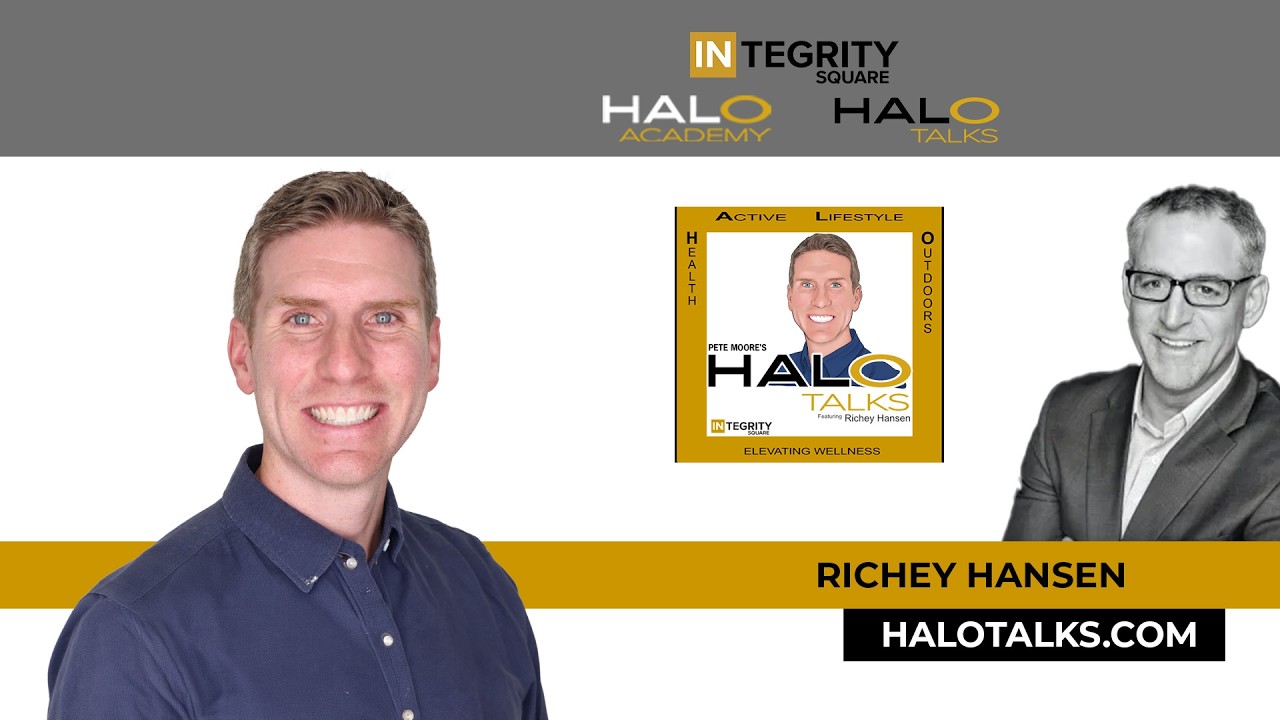
What does coaching Olympic Trials runners have to do with picking early-stage health-tech winners? More than you would think. In this episode of HALO Talks, host Pete Moore, joined by Integrity Square's CMO & Executive Producer David Ganulin, sits down with Richey Hansen, founder of Ola Capital, a venture fund built around healthy aging and health span.
Hansen explains how he went from running and sports rehab to leading investments, what it actually takes to raise a fund in this market, and why elite athletes are the proving ground for technologies headed to the mass market.
If you invest, found companies, or operate in the HALO (Health, Active Lifestyle, Outdoors) sector, this is a clear-eyed look at early-stage investing, fund formation, and the health span thesis. Listen above, or read the recap below.
From UC San Diego running to a Boulder sports clinic
Hansen ran cross country and track at UC San Diego, then moved to Boulder in 2009, where he built a sports injury prevention and wellness clinic with a satellite location in Denver. His work centered on professional endurance athletes, including events at USA Track and Field national championships and the Olympic Trials.
Why Roots Running Project is a nonprofit
In 2016, with demand growing from athletes who wanted to train in his and his wife's system (she finished 10th at the 2016 Olympic Trials), Hansen co-founded Roots Running Project, a nonprofit training group for post-collegiate distance runners. It grew into one of the more competitive groups in the country, peaking around 33 athletes who were Olympic Trials contenders from 1,500 meters to the marathon, with top-10 finishes at national championships and the world marathon majors.
The nonprofit structure was deliberate. Performance brands treat athletes as independent contractors rather than W2 employees, and a nonprofit let the group accept donations from multiple sources, stay brand-agnostic, and bring in developing athletes who were not yet signed. Individual athletes could keep their own sponsorships while the entity provided the shared infrastructure. As Hansen frames it, it was never meant to be a profit stream for himself. It was a pass-through that funded the athletes, covering operational costs and, in some cases, things like MRIs during injury rehab.
Pivoting from clinics to the technology layer
Around 2013 and 2014, reimbursement in Colorado shifted from a fee-for-service to a fee-for-visit model, squeezing the clinic and pushing it toward a high-volume approach that conflicted with the kind of care Hansen wanted to deliver. In 2021, he decided to move to the technology layer, where interventions could reach a broader community more cost-effectively. He wound down and sold the Boulder clinic, joined the patent and licensing team at the University of Colorado's Healthcare Innovation Fund while earning his MBA at CU Boulder, and in 2023 became head of investments at Revere.
Leading investments at a niche healthcare fund
Revere was a niche healthcare fund focused on oral health and systemic disease, with a limited-partner base that included clinicians and dental service organizations (DSOs). Hansen led the investment process, negotiations, and portfolio management. The mandate was broad on technology type (digital, medical device, therapeutics) as long as it had oral-health applicability and clinician oversight, and stage ranged from pre-seed up to one Series C, with most deals at seed.
A key dynamic: Revere often ran diligence twice, once against its own investment criteria and once for whether a company could fit a corporate partner, even when Revere would not invest. Payers and DSOs that would ultimately cover or acquire a technology could also invest in it. Pete summed it up as "kissing several rings at once," the same inside-baseball alignment some healthcare-services funds use when their LPs double as the distribution channel.
Building conviction in early-stage founders
Hansen sees a direct parallel between elite-athlete coaching and early-stage investing. At the early stage, the financial projections are almost always wrong, so the real work is testing whether the team can execute and looking for a certain personality archetype. He notes that the higher an athlete's aptitude, the less feedback they actually need, and the same is true of founders. The investor's job is to be operational support and to bring industry-specific relationships and insight, not to micromanage.
The funnel math behind the portfolio
The numbers Hansen shared make the filtering job concrete. Revere's portfolio was 47 companies when he left. Over two and a half years he made roughly 32 investments (about 17 of them new), running a rolling-fund cadence of one to three new investments and one to three reinvestments per quarter. To get there, he looked at around 2,000 deals, roughly 1,200 of which had industry applicability. As Pete put it, that is about three investments per hundred relevant deals.
Why launch Ola Capital
Hansen did not want his venture reputation tied to a single niche. With Revere raising its third fund, the timing was right to step out and build something with broader reach in a space he sees as especially attractive right now: healthy aging and longevity. Ola, he explains, is Hawaiian for "to live, to thrive."
What it takes to raise a fund right now
Fundraising is hard in the current environment, in part because a lack of liquidity in private markets has left many LPs waiting on exits before they redeploy. Hansen put a typical raise at 12 to 36 months, with size, industry focus, and team experience all mattering. He credits a team and advisor bench drawn from hedge funds, private venture, family offices, and leading researchers in healthy aging and sport performance, which gives the fund both deal flow and credibility.
Early-fund capital, he notes, comes largely through relationships: individuals and family offices, plus health and wellness founders, executives, and professional athletes who share a passion for the space.
Inside Ola Capital: Closing the health span-lifespan gap
Ola Capital focuses on optimizing health span and closing the gap between health span and lifespan, which Hansen says is the largest it has ever been, with the US leading at roughly 12.5 years lived in a disease state. The thesis leans on his elite-athlete roots: Many technologies start in the elite athlete market as a proof of concept for incremental performance gains, then find their way into mass-market adoption.
Ola plans to use professional athletes to create visibility for portfolio brands while validating the underlying technologies through clinical researchers and clinicians on the front end. The fund is targeting roughly $35 million and was still raising at the time of recording.
Key takeaways for HALO investors, founders, and operators
- Legal structure is strategic. A nonprofit let Roots Running stay brand-agnostic and accept multi-source funding that a for-profit could not.
- Reimbursement shifts can force a pivot. Moving from a services clinic to the technology layer was a direct response to changing economics.
- Bet on the person. Early projections are unreliable, so conviction comes from the founder archetype and ability to execute.
- The funnel is unforgiving. Roughly 1,200 relevant deals produced about 32 investments.
- Align LPs who are also buyers. When payers and corporates can cover, acquire, and invest, distribution gets de-risked.
- Elite sport is a proof-of-concept pipeline. Performance tech that validates with athletes can scale into mass-market healthy aging.
In their words
On early-stage diligence, Hansen notes that projections "tend to be wrong" at the early stages, so the real test is the team's ability to execute.
Pete, on the odds of venture, joked that he thought he would bat a thousand and the reality was closer to .250 or .300.
Chapters
- 00:00 Meet Richey Hansen and Ola Capital
- 00:44 From UC San Diego running to a Boulder sports clinic
- 01:22 Founding Roots Running Project, and why it is a nonprofit
- 05:14 How elite-athlete coaching compensation works
- 07:18 Pivoting from clinics to the technology layer
- 08:40 Leading investments at Revere (oral health and systemic disease)
- 10:25 Building conviction in early-stage founders
- 13:14 Aligning LPs who are also customers and acquirers
- 14:26 The numbers: 47 portfolio companies and ~1,200 relevant deals
- 16:37 Why launch Ola Capital
- 18:00 What it takes to raise a fund today
- 22:09 Inside Ola Capital and the healthspan-lifespan gap
- 23:29 Closing thoughts on the convergence of fitness and healthcare
About Richey Hansen and Ola Capital
Richey Hansen is the founder of Ola Capital, a venture fund focused on healthy aging and health span. A former UC San Diego cross country and track athlete, he moved to Boulder in 2009 and built a sports injury prevention and wellness clinic serving professional endurance athletes. In 2016 he co-founded Roots Running Project, a nonprofit training group for post-collegiate distance runners that grew to around 33 Olympic Trials-caliber athletes.
He earned his MBA at the University of Colorado Boulder, worked on the patent and licensing team at CU's Healthcare Innovation Fund, and served as head of investments at Revere, a healthcare fund focused on oral health and systemic disease, before launching Ola Capital. (Ola is Hawaiian for "to live, to thrive.") The fund is targeting roughly $35 million and was still raising at the time of recording.
Resources mentioned
- Ola Capital: https://www.olacapital.vc
- Roots Running Project: https://www.rootsrunning.org
- Integrity Square: https://www.integritysq.com
- Promotion Vault: https://www.promotionvault.com
- HigherDose: https://www.higherdose.com
Related episodes you'll enjoy
- Adam Sedlack, CEO of UFC GYM, on going asset-light and global
- Nick Ovenden, president of GreatLIFE Golf & Fitness, on building a fitness ESOP
- Dr. Joel Fuhrman on the benefits of exercise, leaning into a plant-based diet, and American's health span.
Listen and connect
Listen to the full episode of HALO Talks above, then subscribe wherever you get your podcasts so you do not miss the next conversation. If you are building, buying, or selling in the HALO sector, connect with the team at Integrity Square at integritysq.com.

Amanda Guarniere of GuardianMD on Med Spa Compliance, Peptides, and Picking a Niche