


 Apple Podcasts

 Spotify

 YouTube

 Amazon Music
Episode #511: Chelsea Piers Leadership: Greta Wagner on Culture and Customer Connection
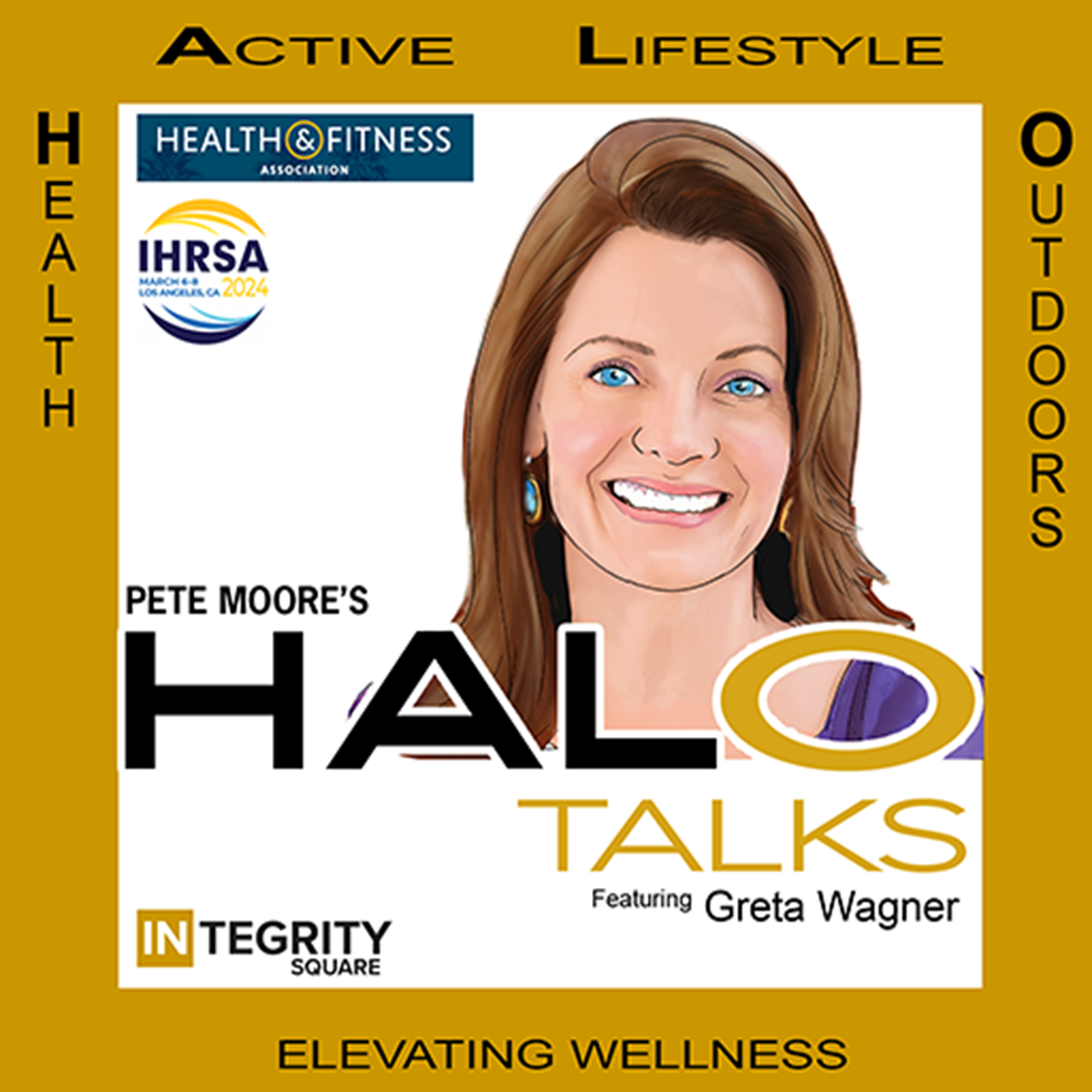
Greta Wagner is a seasoned fitness industry veteran with over four decades of experience in the HALO (Health, Active Lifestyle, Outdoor) space. A current Board Member of the Health & Fitness Assocation (formerly IHRSA), and Executive Director of Chelsea Piers, her journey began at the age of 16, when she started teaching what used to be called "aerobic dance." After a decade-long hiatus in the golf industry, her return to fitness was marked by a pivotal realization: The sector had seen little growth and was still grappling with engaging the same 80% of people who do not participate in regular exercise or attend fitness clubs. Her career reflects both her adaptability and enduring passion for promoting a healthier lifestyle.
Greta shares her invaluable perspectives on fostering inclusivity, broadening communication, and the significance of a positive work culture that transcends beyond just having state-of-the-art facilities. Also discussed are the pressures of athleticism on young kids, branding excellence of Chelsea Piers, and innovative ideas for advocacy in the health and fitness sector. We'll hear about the challenges of maintaining client attention, and the evolving landscape of video and streaming technology. Finally, we'll look at leveraging competition and technology to drive member engagement and success. This episode is packed with valuable insights from an industry veteran on leadership, resilience, and the collective effort required to drive meaningful change in our space.
On workplace culture, Wagner states, "I can't dictate what company culture is gonna be. I can hope what our culture is gonna be. We can say 'this is what our strategic plan is to make our culture,' but it's our actions, and it's how we live our lives in every moment while we're working together, playing together, socializing together, and our principles and core values. If you stay true to those and you hire the people who believe in those core values and can live it . . . that will resonate. In my opinion, that is everything."
Key themes discussed
- IHRSA (and the industry's) challenges during the pandemic.
- 10-year summer camp experience, impact of sports.
- Workplace culture, branding, employee focus, values.
- Private, non-institutional company, unique KPIs.
- Monitoring retention and valuing employee contributions.
- The evolving role of the Health & Fitness Association.
A few key takeaways:
1. Greta emphasizes that a positive and inclusive work culture is crucial for any business's success, especially in the HALO space. She illustrates this by highlighting Chelsea Piers' commitment to their core values and how it translates into meaningful connections with customers and a happy, long time, dedicated workforce.
2. She emphasizes the importance of open conversations, organization, and effective messaging to address societal and political divisions. Enhancing communication and education within the club environment can foster unity and collective growth.
3. Both Moore and Wagner stress the significance of offering a variety of sports to children, rather than early specialization. This approach helps in reducing pressure and optimizing overall athletic development, allowing kids to explore various interests and skills.
4. Pete asks about leveraging the large membership base of clubs collectively for advocacy efforts. Collecting a small contribution per member per year, as Pete suggests, could significantly bolster financial capabilities for important advocacy initiatives at local, state, and federal levels.
5. Greta discusses the resilience of Chelsea Piers during natural disasters, highlighting the collaborative effort of employees and members to rebuild the property. This underscores the solid and caring culture of the company, which is pivotal in navigating crises like the COVID-19 pandemic.
Click here to download transcript.
Resources:
- Greta Wagner: https://www.linkedin.com/in/greta-wagner-6764a4bb/
- Health and Fitness Association: https://www.healthandfitness.org/
- Chelsea Piers: http://www.chelseapiers.com
- Prospect Wizard: http://www.theprospectwizard.com
- Promotion Vault: http://www.promotionvault.com
- HigherDose: http://www.higherdose.com
Connect With Us:
Instagram: https://www.instagram.com/thehaloadvisors/?hl=en
Facebook: https://www.facebook.com/Integritysquare
YouTube: https://www.youtube.com/@halotalks
LinkedIn: https://www.linkedin.com/company/integrity-square/
Website: https://www.halotalks.com
Loved this episode? Leave us a review and rating here: www.ratethispodcast.com/halotalks and don't forget to check out the HALO Academy for Executive Education opportunities.
0:00 I am super excited to announce that we now have a formal partnership with the prospect wizard. And when I say wizard, I mean wizard. Obviously, you have a website. This allows you to convert your website traffic visitors directly into leads. It's not just another chatbot, it is not AI, but it allows a visitor to call, text, or leave a voice mail, immediately goes to you, your sales team, or anyone else in the club instantly. MIT shows a study that if you contact the lead within 10 minutes, chance of them converting goes up 9 times that of the average. We got the Atlanta Clubs on it, Vida Fitness, Gold's Gym, Mountainside, City Fitness Philly, College Park, Become one of the next halo companies to deploy the wizard.
0:48 It's easy to use. Go to the prospect wizard.com. Get a free 30 day trial. Talk to my boy, Dave Gallon. He will get you all set up, and let the leads flow based on the wizard. Go get them. This is Pete Moore on Halo Talks NYC. I have the pleasure of having Greta, who is on the board of Ursa and has made some game changing moves to make this industry better. And also one of the top executives at Chelsea Piers. So we're gonna talk about Ursa changing to Health and Fitness Association. Talk about how we brought Liz into the, into the fray here and has done some pretty amazing things in a short period of time. Get her view on where the industry's going and, where you as an operator or an advocate of the industry should be focused on your time. So, Greta, thank you, and welcome to your first Halo Talks. Thank you, Pete.
1:36 I'm excited to be here. Awesome. So talk about how you originally got involved in IRSA and where, you know, maybe you said, like, hey. My return on time might also be well spent in advocacy and growing the entire industry and not just working inside my clubs and saying, like, okay. I'm gonna do what I can for New York. I'm actually gonna do what I can outside of that. So talk about how you decided to become a member and allocated time to that, because I think some people get involved in certain associations, don't know what the time allocation is, and say, like, I don't know if I could do this. So talk about how that journey went. Yeah. Well, I've been in this industry for 40 years. I started when I was 16 teaching, you know, what they used to call aerobic dance. And so I have been a supporter and a fan of Ursa since almost inception. And I went in and out of the industry a little bit for about 10 years. I went into the golf industry. And when I came back from the golf industry and went to my first show, and got back into fitness, I realized that we had not really seen any growth. We were still in the same place looking for those 80% of the people who don't exercise, don't come to a club. And I'm like, wow. 10 years and we haven't seen progress. So that started to peak my interest, more in the association and becoming more familiar about what the mission was. But I stayed on the perimeter a little bit. I went to the show. I went to some of the seminars. I knew a lot of people.
3:02 My network over the years, of course, has been pretty extensive. Mhmm. From Rick Caro, Ray O'Connor, and, you know, people who've been in this industry and have had major impact. Gail Landers, and the list goes on, and I felt very honored by that that they all seem to, you know, gravitate and give me, tips throughout my career. Uh-huh. And and then about, I guess, 10 years ago, somebody first said, you know, you should get on the board and you should help contribute because you're definitely involved in your local government. You're definitely at a club that is in one of the largest markets in the world. Sure. And we do fantastic work at Chelsea Piers and very unique. So that started my journey of thinking about it. And then I didn't do it right away because I wanted to make sure when I commit to something, I wanna do it, and I wanna do it a 100%. And then in 9, 2019 is when I first got on the board. And very soon after, I think it was maybe my 2nd or 3rd board meeting when COVID hit. And just like all of our businesses, that's, you know, really determined, okay, are you on track? Just like everybody's business, if you were on track and you were doing the right things and you were on your game, you can survive. And things went a little bit better. It was horrible for everybody. But, if you weren't, you were in trouble. Let me let me ask you a question given that
4:33 you're on the board of Ursa. And, I'll tell you my story, my perspective on it. Right when Irsa right when COVID hit, everyone's like, oh, Ursa's not doing enough. Ursa like, you guys haven't funded Ursa to do this. Right? So don't don't blame Ursa for not having, like, lobbyists that you're not willing to pay for. And some of the larger players in the space aren't part of Ursa. So they have their own lobbyists, and they're they're kinda doing their own thing. And then we're basically having to kinda get these super regional groups or these state groups together, and and it happened in pretty short order. And I I think it was pretty successful, you know, given that you can't really move certain politicians in certain states to to accommodate us. And we're not, quote, unquote, like, essential businesses, which I think is a crazy thing that we're not. But Yeah. You know, for being on, like, maybe the front lines of that and saying, like, hey, look. Like, we got a budget to run a trade show. We do some really good research. Like, we do some policy, but, like, don't make it seem like we're like the NRA, and we've got, like, a $200,000,000 budget when we have, like, a $4,000,000 budget. So how did you kind of digest that and say, like, look, we can only do so much. I'm more grassroots, and we'll do what we can, like, from a gorilla standpoint. But tell me, like, what was going through your mind on that? Think the whole industry just pulled together because out of necessity, we had to. Yeah. And, you know, CEOs that hadn't talked to each other now started to talk to each other. Groups started to form, you know, a lot of it led by IRSA, because everybody really stepped up, And we made changes, the necessary changes we needed to make in order to get stronger and to be there to support people. But, you know, everybody has to do the work.
6:04 And especially on an, you know, advocacy front, it needs to be local. It needs to be start locally, then in within your state, and IRSA, I think, can support that. And, obviously, with Liz's background, she can then and she's compiled an amazing team. Yep. On a federal level, we can have make some impact, and we're already making a lot of impact. But, you know, we created team 435. Yeah. I wanna talk about that. So Q Q is a good friend of ours, and we Yeah. Talked a little bit about that. But educate people on, like, look, we gotta get down to each one of these districts, so we gotta make change. However, you gotta have a really big ground game to do that. So talk about how you say, hey, let's do this. And then how do we get the resources behind things like that? Yeah. Well, we need people to realize that, you know, it costs. Right? So we need people to join. That's number 1. We need every club. And if you're a club that is a member of Ursa, then you need to get to your network within your town and state and find other operators within the health and fitness because now we're the health and fitness association. So that goes broader than just the local clubs, gyms, fitness, and get them in the mix. Get them to join because a lot of that will go back to our advocacy, and then donate to the pack. Right. Right? And and start to realize that this is an investment just like you would in purchasing new equipment, just like you would training your staff, just like you would with, you know, acquiring new staff and the expenses that are associated with that.
7:36 There's an expense and associated with protecting your business. Yeah. And and they have to join us and and give. I wanna I wanna ask you a perspective on something. I was part of the NHFA right when it was originated and then spent spent about a year, year and a half, on that committee. Then Al is now Alonosh Shivani is now on the board of Ursa. It kinda represents our interest, and he's awesome. He's very thoughtful. One of the things I was trying to push through is, like, why can't we just spend a dollar per member per year? Have it collected by whoever your billing company is, excerpt, and then have the member maybe even match that. Or, hey, hey. Do you wanna support the industry and support our club? Because we're basically I mean, Chelsea appears, you could say it's a sports complex. You could say, you know, it's it's basically like the equivalent of, like, an urban country club for the people that part of it. And those people would pay assessment fees, and they would pay joint fees. And and maybe sometimes I feel like the operators are not saying, like, I don't wanna spend another I don't want my members to, like, see another dollar charge, or I don't wanna see anything up, or I don't wanna offer them the ability to, like, co fund, you know, like an Ursa pack or like a halo pack or, Ursa directly. Like, do you think that we should take this to the members as, like, the next frontier? Or do we have to, like, fund it out of our budgets as operators? I think that I think that a lot of our members would welcome it. But what we're really talking what we're really talking about is education.
8:56 Right? So when we talk about putting the fit bill out there, you don't know until you try. You don't know until you put it out there in front of your members what's gonna have meaning to them or not. If they know that they could use their FSA for their gym membership or for for Chelsea Piers, it would be for their child's sports, you know, activities. Which is like an infinite infinite budget. Right? It's huge. Yeah. It's huge. So so I think that, you know, the goal is to educate people so they understand what are their options. You know? Will they? Some will, some won't. But the most important thing that we can do is try and get people to write to their representatives to let them know how important this is because there are 70,000,000 members. We heard that today Yeah. At the keynote address and throughout the day, plus, plus, plus. Yes. So I mean, a dollar per member, you got probably one of the largest budgets of any, you know, advocacy or nonprofit association in Washington if we had $70,000,000. And Liz and her team are doing a fantastic job creating these ideas and, you know, getting out there and executing, and that's you know, we talk a lot about that during our board meetings. And, and all of the different committees, it's not just happening at the board level, obviously. Right. It's happening at the club level, the committee level. So everybody has to participate, and we can't lose that feeling. The one good thing that came out of, you know, 4 years ago is that we do need to band together a little bit more and not get so tunnel visioned
10:27 that we can make an impact because there we have the power of numbers. This is Pete Moore. I wanna let you in on a little secret. There's this company called Promotion Vault, and what they do is they give out rewards from retailers that allow you to incentivize your members without having to do zero down and 1 month free or giving away shakes or giving away t shirts. What you want to do is build a rewards program that lasts, that people value, and that doesn't discount your own products and services. So here's the deal. There's something called rewards vault. The rewards vault is going to allow a member to set up their own profile.
11:08 They are going to answer questions. You are gonna get those answers. You're gonna be able to target those members, and you're gonna reward them inside your club, inside your spa, and outside of the club and outside of the spa to get them to become loyal, to get them to pay their monthly dues, and to be rewarded properly for the actions. A lot of companies are cutting back on rewards. You shouldn't be. Promotion Vault's your answer. Trust me. This is real. Do you think, just a question that it's something I I I thought of recently. I don't wanna get political at all. Please don't. No. No. But but I'm saying, like, effectively, like, we have 70,000,000 members, and I'd probably say 60,000,000 of them vote. Right? And I feel like what we go in there and we're advocating for the industry, but we're not, like, advocating as if it's like a voting block. I just wanted to is that something in the future? Like, there's certain people that are on the news. I'm I'm going I'm going straight here for a second, but I I just wanna get your take on this. I don't want people to think about this. Like, there's certain people that are, like, they're, like, one issue. They're they're one issue voters. Right? Mhmm. Some people might have certain views. Like, I don't care what this county thinks. Like, as long as they're on board with by one issue. Right? And there might be a lot of people that say, like, I want more bike lanes in New York City. I want more parks to play in. And my candidate is x because that is what they believe in. I'm gonna vote for them. Right? But we don't really use that as like a a chip on the table. Like, hey, I got a $70,000,000
12:38 70,000,000 people that vote or 60,000,000 people that vote. In addition, we've got this budget that we can help, you know, sponsor your candidates and your events and so on and so forth. I just wonder if, like, does that does that ever become something that you think could be relevant or, like, pressure change? I mean, it could be. I think everybody has something that's important to them, and I think if you can speak to that. But then also try and have people broaden their minds a little bit so they're not just focused on, hey, that one thing that's important to them. Yeah. Yeah. And, again, it goes back to education, and it goes back to just communication and to kinda letting your guard down a little bit. And we're very divisive, right, in in our politics and in in a lot of things these days in life. So I think it's really and and where we're unique within our club environments is that we've got an audience that usually love us. That's why that's why they're here. They they want to talk to us. They want to talk to each other. They want to, you know so whether it's, you know, having, a social and coffee or drinks or, you know, doing a class together or going on a hike together, you know, where those conversations start to come up. So but the person needs to start the conversation, not to be afraid to have the conversation. I know that, listen, myself included, we stop the conversation because we don't we we kind of think of this is the direction it will go. Yeah. I know. So, like, it's the beginning of our conversation.
14:07 You know? So I'm just trying to think about, like, during during COVID, I listened to, like, a ton of, like, you know, like, documentary series and, like, you know, podcasts that I've and and they had one on the NRA. Mhmm. And I was thinking, like, you know, we're, like, the equivalent of that. Like, instead of like rifles or like biceps and muscles and, you know, like getting tone in a in a in a weird way. But they talked about like the size of their membership base. I'm like, we have like the same size membership base, but we don't like use it properly. It's like Right. The pressure. Anyway because we need to be more organized. Yeah. And we need to have one voice, and that's what Ursa is. Right. And we need to prioritize our messaging. Yeah. Right? And I'm not advocating that, like, Ursa would, like, support, like, specific candidates. I'm like, look, if you vote, like, we just wanna get this as, like, on a priority list. So I just wanna clarify Right. That I just want them to know, like, we got 7 60 out of 70,000,000 people here probably vote. And, you should be listening to what they want, and and maybe reprioritize what what you want based on what we want. That that that was my point. Yeah.
15:05 So so pivoting over, Chelsea Piers, and I've been there many times. I've spent a lot of money bowling. Thank you. I've been soccer. I've been I used play roller hockey there, which was Yeah. Which was the best. I used to play roller hockey every Thursday night on that one outdoor court. I don't even know if still there. Our roller rink's director, Craig Woodcock, is now our camp director. And it was like, yeah, people grow up at Chelsea Piers. It's a great place. And I went to summer camp for 10 years. So every time I go to Chelsea Piers, I feel like I'm in upstate New York, and I can, like, do whatever activity I want, which is awesome. There's so much emphasis on kids programming right now and leagues, and whether it's participation awards or treat teaching them how to win. But a lot of kids are growing up now on a path of, like, hey. I'm gonna do one sport. I'm gonna do well. I'm gonna try and get into college. I think I'm gonna, you know, you know, bet my career or bet my life on on a sport. Are you seeing some of that, like, pressure or, like, optimization of of athleticism kinda hit, like, new levels of of demand?
16:05 Yes. I think that one of the things in it, especially what we do at Chelsea Piers, we don't practice kind of that specialization at an early age. Right? So everybody you know, people come in, they're hockey players, they're swimmers, and this is their one sport, and they're gonna do it, and they're gonna go to train, and they're getting nutritionist, and they and all before they're, like, 8. You know? That doesn't make any sense. Yeah. Yeah. So I agree with you. Philosophy is that we think that people should try a lot of different sports and become a better person through athletics. And eventually, you will find your sport that, okay, I love this. I wanna be a swimmer, and I need to dedicate the time to do that. But at those early years, you wanna have I mean, for, you know, injury prevention, for just exploratory reasons and and discovering who you are as an athlete.
16:58 You you want variety. Right? So so that's something that's very important to us. It's very important to our athletic director and how we guide our programming. And, but, you know, kids now are so overtaxed, both mentally and physically and emotionally. And I I see it. I see it. I see it. Statistics. And, you know, so sports should be something that is a relief and a social Right. Element. Right? Where they can they can find friends and have joy and, you know so, yes, there's the competitive level of it. And and our Chelsea Bears, Connecticut, rehab wonderful, like, national level competitive team sports for our kids.
17:43 But at the heart of it, it's more than that. It is a safe space where they can grow and develop and become good people, well rounded people through sports. I've probably been to Chelsea Piazza, like, a 100 times, you know, in the last 20 years. And now that I'm thinking back, there was never a time I was in any one of your areas where I felt uncomfortable, where somebody was arrogant, where somebody, like, judged somebody's athletic ability. It seemed like cultural and, like, top down that, like, we are go we are here for everyone. There's, like, a no judgment zone. We don't care how old you are, what condition you're in, like, you'll find a a a safe place. We'll we'll find a spot here. How much of that was, like, by design, and how much of that kinda just, like, is the way people interact? I mean, I think everything as far as your culture is concerned is, you know, it it it's who's your leadership. So it all starts with leadership, and we were lucky because we had 3 gentlemen who Roland Betts, Tom Bernstein, and David Tewksbury, the 3 principals of Chelsea Piers, led in a way that encouraged growth development, you know, that that it is a place that people wanna be. And when your people wanna be there, like, you know when you walk into a business and you see somebody who's behind the counter or somebody who's waiting on you or somebody who's, you know, sweeping the floor, you know whether they love their job, love the people that they're working with, and want to be there.
19:07 And it makes a huge difference. I mean, that is your culture is your people. Right? You don't you don't I can't dictate what my culture's gonna be. I can hope what our culture is gonna be. We can say this is what our strategic plan is to make our culture, but it doesn't it's our actions and it's how we live our lives in every moment while we're working together, playing together, socializing together, and and our principles and our core values. And I think if you stay true to those, your p and you hire the right people, you hire the people who believe in those core values and and you're good to your people, that will resonate.
19:49 Yeah. And it is in my opinion, it is everything. You can have the best equipment. You can have the best facilities, which we do at Chelsea Piers. We reinvest. We keep everything brand spanking new. People are amazed when they walk through our facilities. But it's meaningless if our people aren't what it's really about, and that's what our customers and our members say. They don't ever say I mean, they always say, oh, god. It's so clean here, and I love it, and it's so beautiful, and I love the equipment. Yeah. But what they really say is, I love, you know, Annie behind the desk because she says hello to me every morning, and my coach is so cares about my kids so much. I will never leave you because of that.
20:32 This is Pete Moore. Here's the last tip for you of the podcast. We are partnered up with a company called Higher Dose, higherdose.com. They are the leader in workout recovery products, infrared technology, LED light masks, neck enhancers, and other products such as PMF mats and sauna blankets. If you have not gotten on the workout recovery train yet, your time and your stop is now. You gotta get these products in there before these workout recovery and spas end up saturating your market. Having your members walk out of the club and going into one of their locations for $200 per month where they're paid 39 to you, let's become an expert in workout recovery if we are already an authority in workouts.
21:21 Higher dose, check it out. There's a wholesale code and we look forward to helping you augment your products and services to meet the demands of your members. And, hey, let's get people happy, healthy, and sweating, and the recovery should be just as good as the workout. Could could I just ask you a branding question for a minute? And I I grew up in yeah. I grew up in Long Island, Westbury, but I spent most of my early adult life in New York, and we have to say, oh, let's go to Chelsea Piers. Right? And then you open up a location in Connecticut. And to me, Chelsea Piers originally was, like, is a destination. Right? And then, like, it turned into a brand. And then the brand now could travel. Like, was there any commentary in the room? Like, hey, let's not call Chelsea Piers. Let's call it, like, Connecticut Piers or or, like but I felt like the brand I'm sure it's not. It didn't happen by accident. Right? You you got team and and and every relationship and and experience kinda builds that brand. But did you ever say, like, hey, how far can we take Chelsea Piers? Because as an example, like, New York Sports Company, like, we're going to Boston. We can't call it New York Sports Company. We gotta call Boston, Washington, you know, Philadelphia. And, like, that created, like, 4 different websites. It created 4 different membership plan. You know, it's it's like top like, the waterfall is, like Yeah. Creates, like, an an, decentralized just disaster basically on operational basis. So was there ever a time when when you said, like, our brand could basically go anywhere? Like, even though it's the Chelsea Piers, like, it isn't Chelsea
22:54 Piers, it's the brand. Yeah. Well, I mean, we had many talks in the war room, and we have a dynamite team, a he a wonderful marketing team. We brought in experts, but at the core of it, you know, you talk and you talk for hours and weeks. Yeah. It does. And then you realize that you're back to your original conversation, which is what do, you know, you you do the research, you, you know, and you find out that people associate our what we offer them, it's Chelsea Piers. It's not Chelsea Piers Field House. Right. It's not Chelsea Piers Golf Club. It's not Chelsea We are Chelsea Piers. I'm trying to think of any any other brand that started out with a destination. Right? Because when he said, hey, we're opening up Chelsea Piers. Like, it probably wasn't like, let's call it like Elevate Fitness. You know? Like, it's like, dude, we're taking over like this area that has nothing going on, and we're gonna turn it into, like, this vision that far exceeded anybody's expectations on what that could become. And the draw that people would go there, I think, far exceeded what I would have assumed people would, like, walk to the west side back back in the day. Yeah. It's not really what you did. Yeah. But you didn't walk back there. I mean, before we were there, 20, but yeah. District unless you're, like, 1 o'clock in the morning, you're looking for a taxi out of, like, you know. To say, you know, the the women in skirts, they're not I mean, now they're figure skaters, but they weren't then. Yeah. Yeah. Yeah. There might be people coming in for a early morning workout and people walking out from a nightclub. You're right. Time on, like, the Westside of 23rd Street. I can't think of any other place.
24:17 Maybe I'll put it in the show notes, but, like, a place that started out as a destination and now is, like, an actual brand. I don't know. I don't think they have. I don't We should we're gonna think there is. We're gonna have to research that and find out. Find out a brand. But, anyway but it's a strong brand where, you know, it took well, listen. It's been 29 years, so, a lot of work. But and, again, every day creating that excellence, exceeding expectations of our members and our customers, that's what builds a brand. That's what real builds the trust and the loyalty is every day, it's a new day. And that's what our people feel. Like, they're proud to wake up. I mean, it's a hard business. Oh, yeah. Right? No no doubt. You're running you're running like a mini city, basically. Right?
24:58 20. Yeah. Almost 247. So it takes a special kind of person who's gonna get up at 4 o'clock in the morning to be on the ice at 5 AM Yeah. With a smile on and coaching those kids and, you know? So There's something funny. My my buddy used to play hockey. He used to play at 11:30 tonight. I play, like, 5. Yeah. I'm thinking, like, who gets the who gets the pre premium ice time? I feel like nobody gets premium ice time. Everyone I know is, like, playing hockey. Like, bizarre hours. Right? Yeah. Life. Yeah. Alright. So my last my last question for you is, you know, you you you run a a company that is is private, and it's and it doesn't have any institutional capital in it as far as I know. And it's not publicly traded, so you don't have to hit, like, 90 day goals and, you know, report your earnings and things like that. What are some of the KPIs that you look at that maybe other companies, like, can't really look at because it's not really private equity doesn't care about, like, your Medallia or, like, your customer rating as much as they care about, like, what your EBITDA margin is or, like Right. What your membership role for report looks like.
25:58 So do you feel like I mean, that's all less or beneficial that, like, hey, I can also, like, think about the long term brand or, like, what I'm actually delivering here because I'm not just delivering financial results. I I just it just came up in my mind that the way you're talking about the business is not 29 years. Like, you don't run the business quarterly in 29 years and have somebody, like, you stay there and say, like, okay. I'm on, like, this quarterly earnings treadmill. Like, it's it's exhausting. Right. Right. So I I just wanna comment on, like, KPIs that maybe matter to you that maybe other people, they can't because it's, like Yeah. Too long term. Listen, KPIs are incredibly important, and, you know, all the things you just mentioned are still important. No. You're true. Of course. Of course. Of course. Of course. Of course. Of course. Of course. Of course. We do look at the monthly numbers. Yeah. But, you know, each department and each business has and each role has their own KPIs. So if you're not tracking those Right. And that could be, you know, it it it is our Medallia score. It is our net promoter score. It is, you know, what's our turnover in each department?
26:59 It is, you know, obviously, the the obvious sales, retention. All of those things are incredibly important. You know, how many compliments do do we get? What do we, you know, each week? What's That's right. You know, so it it's all those little moments of truth where our customers and our members define and determine who we are. Yeah. That's right. It's not us. It's not you know, it's really them, and and retention is everything. And sometimes people leave, and then they come back. So we we track that as well. Yeah. Because it's a big world and people move around, especially in New York.
27:41 So, you know, I think you have to look at your own business and determine again, go back to your core values, go back to each role, because every single person plays a really important part of your business. We have people who've been part of our housekeeping team for 29 years, and they attack their job every day. Yeah. It's amazing. And they know that they are super important because when we have our quarterly meetings, when we have our state of the peers, you know, the the founding members and our principals are up there giving them awards and talking about how spectacular they are and that nobody would come if we weren't clean and nobody would come if we weren't friendly. Sure. And we have to be fun, and and those are our core principles and values. So people, you know, when you live it, really live it, people know that it's authentic, and they stay, and they work from their heart, not just for a paycheck. Yeah. That's right. Because they want to work. Especially during COVID, I'd be like, if you don't know everyone in the names of the people that are actually cleaning this club, like, these are the most important people in your club right now. Like, don't walk past them ever. And forget COVID. Like, we went All the time. Yeah. We went through storm Sandy. Yeah. I have never experienced anything like that in my life. Yeah. We built I mean, from 6 feet down, we had to demolish the entire property. Yes. And we did probably 6 months of work in 30 days. Who did that work? Everybody.
29:12 You know, they came in, and we even had our our members wanting to come in and help us. They came to the door and said, can we help you? That's awesome. Tear out this sheetrock, can we help you? You know, it was like everybody came together and it was it you know, the ultimate and most expensive team building activity we ever had in our lives. I hear you. But it really showed us that our people care about us because we care about them. Yeah. That's great. Well, thanks for coming on. Thank you for your service to the industry, and and thanks for, being able to pull Liz in. I think she's a great leader, and, she's awesome. Very integral. To everyone feeling safe, I think, and, like, didn't know that, like, the ship's got a captain, and and the captain knows where we're going and, you know, is is communicated well with everybody too. K. And the name change, I think, is is great. Maybe we Yeah. We just need to get everybody on board with her on that ship and donate to the pack and be a member and maybe upgrade your membership. And, you know, we can do great things together. Our association is strong and it's getting stronger every day and the future is incredibly bright. And we want everybody, you know, on the boat with us. Yeah. So we use that that halo term. So we wanna be at the ecosystem of everything that's going on here and start to bring in more and more people that Yes. Have the same mission as us. So as these events grow and maybe we'll get our name in there at some point over the years. But, like, we'll we'll put the show be twice the size, and we just gotta articulate, like, hey, what do you believe in?
30:35 That's what we believe in. Why don't you get on board? So thanks for doing what you're doing and what you're gonna continue to do, and I'm glad we finally got a chance to meet. Me too. Thank you so much. Chelsea Piers, Ursa board, and all things awesome. Thank you. Thanks, Pete.