


 Apple Podcasts

 Spotify

 YouTube

 Amazon Music
Episode #581: Crossing the Tech Chasm-How Teambuildr Is Driving The Future Future of Coaching with Hewitt Tomlin
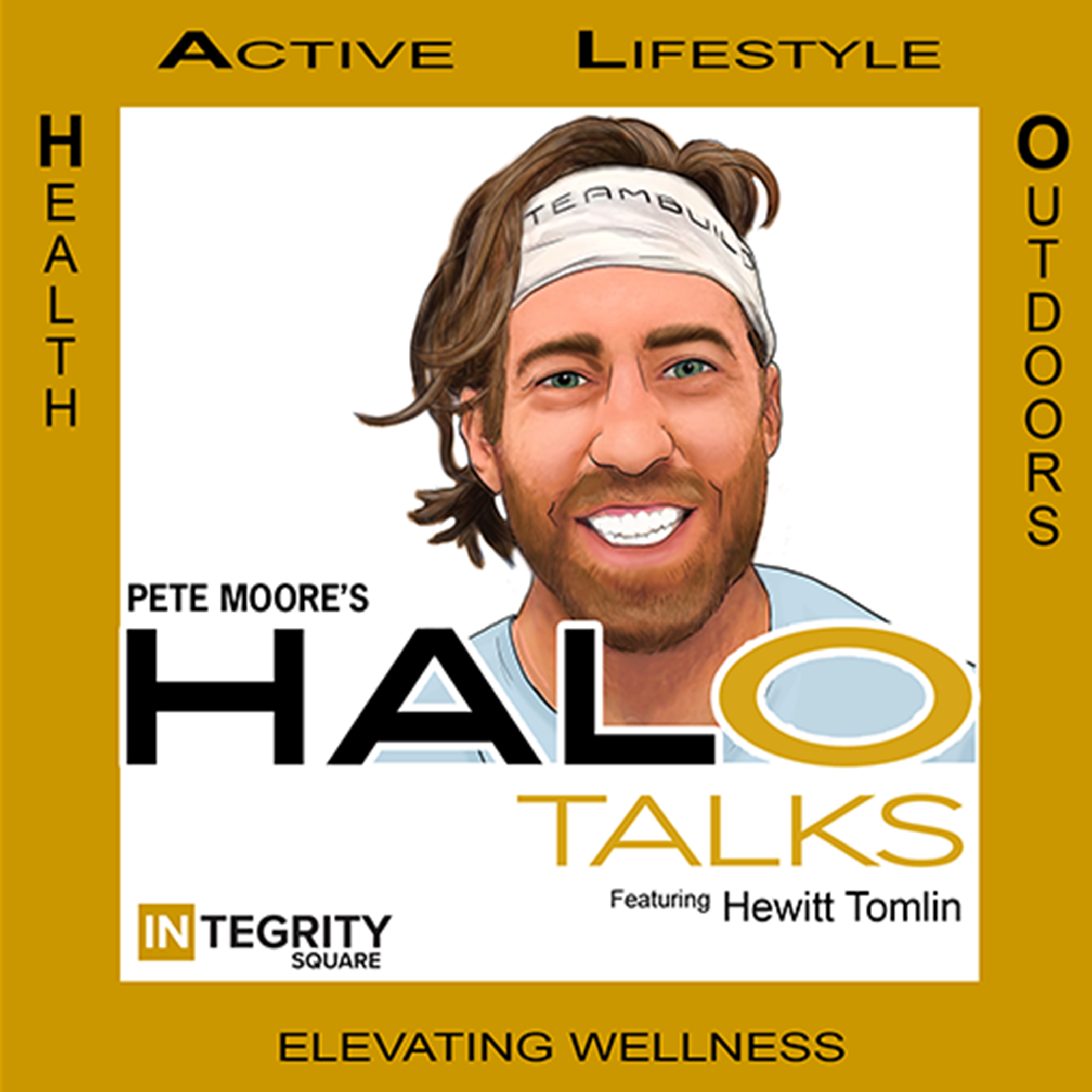
Welcome to HALO Talks! In this episode, host Pete Moore sits down with Hewitt Tomlin, the entrepreneur behind Teambuildr—a software platform that's changing the game on how strength coaches and personal trainers deliver programming. Starting with a simple idea in college, Hewitt has built Teambuildr into a leading solution for gyms, coaches, and athletes, empowering thousands with better tools for training and performance.
Together, they dive into the rapidly-evolving landscape of fitness technology, discussing the rise of strength training in gyms, the impact of AI on coaching, and how fitness pros are adapting to new ways of working in a post-pandemic world. From leveraging digital apps for personalized programs to building strong trainer-client relationships, this candid conversation uncovers what it takes to stay innovative in the fast-paced HALO sector.
Tomlin also shares his passion for expanding athletic training into new markets specifically golf—with his involvement in DRVN, a fitness app aimed at merging athleticism with golf performance.
Key themes discussed
- Evolution of Teambuildr and fitness technology.
- Adoption of AI by strength coaches and trainers.
- Changing trends in club equipment, focus on strength.
- Personal trainers utilizing digital tools and apps.
- Balancing innovation vs. refining existing product features.
- Retention vs. impact as a measure of success.
- Entrepreneurial mindset and self-defined business goals.
A Few Key Takeaways:
1.Evolution of Teambuildr and Fitness Tech: Hewitt shared the journey of Teambuildr—from its origins as a simple workout distribution platform for college strength coaches to its role as a robust SaaS solution that now supports thousands, not only in team sports but also across private gyms and brick-and-mortar facilities.
2. AI's Role in Coaching: The conversation highlighted how fitness software is rapidly moving from basic digitization (getting off Excel) to integrating AI. Early adopters among coaches are using AI as a "co-pilot" to enhance programming and audit workouts, freeing up more time to apply their expertise where it matters most.
3. Changing Attitudes Toward Training Technology: Tomlin also talked about the shift in the industry: while trainers were once skeptical about templates and AI-generated programs, there's now a broader acceptance of tech-driven best practices. Still, personalization and expertise remain key, especially for more seasoned coaches.
4. The Personal Trainer's Balancing Act: Independence vs Community: Post-COVID, many trainers tried going independent, but Hewitt noted the challenges of customer acquisition and scaling. Bigger box clubs like Lifetime offer access to a steady stream of potential clients and a sense of community, making them an attractive option for many trainers seeking sustained growth.
5. Founder Perspective: Success Isn't Just About Growth: The episode also touched on how Hewitt's vision as a founder goes beyond revenue metrics and external pressures. He values building loyal, long-term customer relationships, personal impact, and conversations with trainers and mentors over chasing aggressive growth targets influenced by VC funding.
Resources:
- Hewitt Tomlin: https://www.linkedin.com/in/hewitttomlin
- Teambuildr: https://www.teambuildr.com/
- DRVN Golf App: https://www.drvngolf.com
- Integrity Square: https://www.integritysq.com
- Prospect Wizard: https://www.theprospectwizard.com
- Promotion Vault: https://www.promotionvault.com
- HigherDose: https://www.higherdose.com
0:01 This is Pete Moore on Halo Talks nyc. Coming in from Arlington, Virginia, an entrepreneur who's turned workout cards into a platform that is serving thousands of people. Hewitt, Tomlin, thanks for being on the show. Thanks for having me today. Awesome. So look, you've dedicated your life here to Team Builder and you got some other things going on in other tertiary markets which were all about the Halo sector. So, you know, give us, give us a little background on how you got involved here and how you wake up every day passionately knowing that you're going to change a lot of lives. Just might take a little time. Yeah, no, I, I'm good at the short version, so don't worry about that. Look, my business is a post iOS business.
0:45 IPhone came out my freshman year. I played college football and my teammate and I realized that the strength coach is building workouts on Excel. With the advent of the iPhone, this was something that could be done better for the coach and for the athletes. The team Builder originally was a distribution system for collegiate strength coaches. What ended up happening was the modality of training, like an athlete in a team setting really took off in the private sector. CrossFit really popularized barbell training. So our business today is not just a team sport business. It's a private gym, brick and mortar facility, software business for anyone who wants to train. You know what I've seen over the evolution, I've been doing this now 26 years. You know, the amount of strength equipment that's going into these clubs, they're pulling out their spinning classes, they're pulling out their yoga classes, they're putting in. I was at a club yesterday, they, they just put down 40 yards of turf and just loaded the place up with, you know, Olympic squat racks. And that seems to be where the next generation actually understands the value of strength training. And if you're going to get your cardio, you could get it, you know, by, by steps and you know, you know, things that are maybe a little more rudimentary, but you can't really replace the strength training component to, to, to, to, to get stronger and bigger.
2:07 You know, when you started this out and, and kind of looked at the market and I'll give you a little background. In 2000, I started up a software company, but it was just way ahead of its time. What are some of the things that you've been excited about when you either talk to strength coaches now where they're not, you know, necessarily wed to their three ring binder and they're not wed to their Excel sheet, you know, that they're actually embracing this and you're not trying to educate them on technology, which kind of what we were doing 26 years ago. Yeah, that it wasn't a fad. Yeah, well, I think that excitement has kind of come and gone. I started team builder 13 years ago and the initial chasm to cross was getting coaches off of Excel and off a pen and paper onto a SaaS portal. And look, you know as well as anyone that things move quickly now. It's less about getting coaches onto a SaaS portal and turning our Web 2.0 SaaS portal, if you will, into something that is leveraging AI. For example, coaches, the early adopters are very interested in using AI as sort of a co pilot, like an assistant coach to audit programming to just leverage themselves. And that chasm will probably be crossed pretty quickly as long as we do a good job with it. But the idea is that look, if a coach is like any other profession, if you have a 20 year work history, expertise and you're still doing work that is sort of commodity commoditized, if AI can do it for you, then you further leverage your expertise, whether that be coaching or designing
3:40 programs or what have you. That's really what's exciting for, for my industry right now. Are there, are there more trainers that are not questioning the AI or not questioning like the templates or the periodization schedules? When we started there were guys that said, well, this is not how I, this is not my philosophy. Has the philosophies kind of somewhat kind of merged into like, look, there's a best practices and there's a way to do this and, and here's the results that you get that you're not being maybe going up against somebody's belief system or like their education system. I don't know if I'm asking the right question, but is there less, is there less like I gotta customize this to the point where I'm doing something completely different or I'm like got a new modality that I'm trying to, you know.
4:27 Yeah. Leverage myself or my, my personal brand. Look, I, I, I see where you're getting at here. It's going to be a hard needle for a company like mine to thread. Mean we could very well come up with the capability of just creating programming from scratch. If we're doing it for the first year strength coach, I don't think we're necessarily doing that coach a favor. That coach, like a freshman in college needs to be creating their own programs, running them, understanding why did it work? Why not how did the athletes feel about this? Just like a freshman who's writing a paper needs to write a paper from scratch and not use ChatGPT to create a paper later on in Life. When you're 20 years into this, maybe 10 years, I don't know, then you can say, look, I can tell a good program from a bad one. I can use AI here to help me out with the knowledge and expertise that is actually not doing any harm or we're not cutting corners. As far as my profession goes. Kind of like how you and I probably use AI at work today. We're not going to do it to do novel things that we don't understand, but we will leverage them to do things that we feel confident in auditing and not necessarily having to originate. Right? Yeah, right.
5:40 When you take a look at over time, it used to be, you know, a health club would have like 8 or 10% of the members maybe in personal training. With the advent and the implementation of Team Builder or other programs that you're involved in, what percentage, you know, usage or, or like, you know, what percentage of the people do you think are actually using technology now? Is it, is it hit a tipping point of, you know, maybe even over 50% where people back in the day would say like you're crazy. Like it's always going to be what the personal training percentage is. I think it's over 50% now. Like, mind you, I'm in the biz and my anecdotal experience here in Arlington, Virginia, this is like fit central.
6:29 So of course the trainers at my lifetime are probably using these apps. The, the clients probably really like them. But all that aside, true Coach really came onto the scene and broke through with the one on one training trainer. Eyes is sort of like the, the stagnant default, no offense to trainerize. And then programs like ever, ever fit, who I love personally by the way, are doing a really good job in one to one training. So I think one to one training for a personal trainer is table stakes. If you're not doing it, maybe your clientele is really boutique, really high end, hands on, older something. But if you're in the middle of the spectrum as a personal trainer, if you're not using an app, I think you're leaving something on the table. Yeah. And then do you see, you know, after Covid, there were a lot of trainers that said, hey, I'm just going to go and build my own, you know, business and, and I'm not gonna have to partner with a health club or I'm not gonna even show up in health club anymore. I'm gonna go and, you know, rent out space. Do you see some of that maybe swinging back? Because people that go to a lifetime as example, look, I want to go to, I want to play pickleball, I want my kids to be here, I want to play basketball, I want to be part of a community. I'm not necessarily just looking for one to one training. Now the personal trainers basically now say, okay, look, I've got a big pond that I could actually fish from.
7:54 Maybe I'll trade that back. Yeah. It really comes down to customer acquisition. Lifetime is providing you a big pond of, in their case, affluent potential customers. When you are on your own, you're responsible for your own pond and your own customer acquisition. Perhaps you can build a, a good starting business. Doing that scaling is where it gets hard. I've met many, many trainers who hit their initial 20, 30, 40 clients. And then from there it's really difficult to take the next step because it's not just you and being accountable to your personal services, it's maybe delegating your services, building a brand other than your, your person. And when you hit that, then you might see someone sort of hit a wall. And it really takes someone special, I think, to grow beyond that. As far as personal training and brand.
8:50 This is Pete Moore. I want to let you in on a little secret. There's this company called Promotion Vault. And what they do is they give out rewards from retailers that allow you to incentivize your members without having to do zero down and one month free or giving away shakes or giving away t shirts. What you want to do is build a rewards program that lasts, that people value and that doesn't discount your own products and services. So here's the deal. There's something called Rewards Vault. The Rewards Vault is going to allow a member to set up their own profile. They are going to answer questions, you are going to get those answers, you're going to be able to target those members and you're going to reward them inside your club, inside your spa, and outside of the club and outside of the spa to get them to become loyal, to get them to pay their monthly dues and to be rewarded properly for the actions. A lot of companies are cutting back on rewards. You shouldn't be Promotion Vault, your answer, Trust me, this is real.
9:54 So I ran a software company back in 2000, 2003 with some guys in Arizona and the software was never done. You know, there was always more things and bells and whistles. So as you look at Team Builder, you know, how do you prioritize what, what the next, you know, version is or what the next update is? You know, we used to be able to have a version update that was, you know, once a quarter or, you know, once every six months. And now it seems like on almost every app you go on, every three or four weeks, you know, there's like a new update, you hit your, you know, your password protection uploaded. So how do you, how do you feel from talking to the entrepreneurs out there, how do you kind of manage nice to have, need to have continuous improvement or to say, hey look, I got to let people kind of digest what the last update was and not just keep adding stuff on to this thing because at some point it just gets like I might lose what I was trying to do in the first place.
10:52 Yeah. So I can tell you have a background in software because you're mentioning a lot of very good principles. There's. We are an example of a company that ships a lot of product, I. E. We ship a lot of updates. And my partner and I more recently have sort of understood that we probably ship too much product. We, we've been erring on the side of putting out a lot and we have to think about the fact that we're a 13 year business now. We're not, in other words, we're not early, we're not early stage, we're not a newcomer. We're sort of established. And what we've done is we've left some technical debt and not back end technical debt, but we've had these functions that are core to our platform that haven't been really readdressed in favor of creating new things. So he and I in 2026 have made a recommitment to invest in the quality of life of our existing users by taking these very core existing functions and re examining them as opposed to creating new. So fewer new initiatives and much more consolidation and tinkering on what exists already is sort of the.
12:04 As a business leader, I'm learning as a stage of a company that my company is now in. Right. So one of the things as an adjunct to that, when we took a look at some of the software companies that were providing personal training to space and the company that we had, you know, we had pretty high attrition. It was like almost like 100%. It was like 8 point. I remember it's like 8.2% a month. Some of that we viewed as like an issue and some of it we viewed as look there's always new people coming in every month. And maybe what we're providing is not necessarily, you know, to, to a potential investor or to, even to ourselves. Maybe our goal is not to track, you know, the retention. Maybe it's to track how many people we've helped people because the attritions really maybe outside of our control or outside of like the behaviors that we as like a B2B to C software company could really impact. So what's your view on that as like a KPI or something that you say like, hey, maybe that's not my problem. Like I've got people using my software and I want them to use it the way they want to use it. And if they can help somebody for three months, awesome. You know, they don't have to be on the, on the, on the software for three years. Yeah. How do you think about that? Well, look, I'm a founder, which is different than if I was an investor. If I'm an investor, I would love for my software asset for its customers to grow in terms of revenue 15% a year. Right.
13:33 That's inflation plus S&P 500. However, I'm not an investor, I'm a founder. I'm not necessarily looking to be really efficient at expanding revenue out of my existing customers. I, I want, what I want as a founder is a very enthusiastic and loyal customer base. And with an enthusiastic and loyal customer base that I'm really in tune with, I probably can create an opportunity to build more things for them that they're willing to pay inflation plus S&P 500 for on a year over year basis. So it's, I think it definitely starts with quality of life. And when you bring a customer in, they don't, don't have a company culture that is so overly fixated on the next customer. Once a customer is in, they should be treated with a higher priority than the next customer because these, this is someone who can potentially stick around for a long time. And just last week I was speaking with a customer who I calculated on the phone with that person, he had been a customer for 10 years. Wow. Which is really unbelievable because a 10 year customer doesn't go 10 years just paying you your software fee. They talk to a lot of people in 10 years. And that one customer is probably responsible for referring a lot of other customers that amounted to more than inflation plus S&P. Yeah, so. So we've been an investor in, I don't know, probably 10 companies across the Halo sector. I'd say two of them are great investments, eight of them were, you know, experiments that didn't go well.
15:03 Given that you haven't taken in any VC money, you kind of can set your own, you know, goals of success, whether that's your, you know, your 15% or hey, I've got, I got X amount of clients that have been around for 10 years and I've probably kept a lot of people alive. I've created relationships that didn't exist before. How do you and your partner, you know, maybe this is, I'm getting, going to get deep for a second or get like, like, like entrepreneurially emotional. But like, how do you, how do you kind of gauge your own success to be like, yeah, okay, this company raised $50 million and lost all 50 because, you know, they don't give a, about anything except trying to do have revenue growth. And at some point, you know, this story will be told that it's, it's probably not going to end well for, for anybody in there versus say like, hey, I got a disciplined company. We're helping these amount of people. You know, I don't have any external factors except the ones that I put on myself.
15:58 You know, I was watching something by Tony Robbins the other day that, you know, you think everyone externally is a trigger, but you're the trigger that let them trigger you. So like, it's in your head type of thing. So how do you give us like a little insight to being an entrepreneur for this long and say, hey, my goals might not be what, you know, what it says they should be. It's what I want them to be? Yeah, it's. Well, thank you for asking the question because that's really core to what's happening in an entrepreneur's brain and their heart. Right. With their business. Yeah, look, there's, there are folks who, and no one's right or wrong, right? At this stage. You have a great opportunity to create a lot of enterprise value. Not wrong. They're correct. And then there are folks and my mentors in this camp. You're doing something really cool and what it's, what that's allowed you to do is do something even cooler. Right. He's, he's talking in terms of impact and, and those things.
16:55 And you know, it really comes down to a lot of self reflection. What do you want for yourself? And as you get older, I feel like I get a little bit more clarity but never really finality. It's just always a thought exercise. Where am I? Am I happy with this? And if not, where do you go from here? So I will say this. At this point I enjoy my conversations with my customers and my colleagues and my business partner and my mentor on a day to day basis much more than I enjoy conversations with potential investors. And so far that that has a lot of meaning to it.
17:36 This is Pete Moore. Here's the last tip for you of the podcast. We are partnered up with a company called higher dose higherdose.com they are the leader in workout recovery products, infrared technology, LED light masks, neck enhancers and other products such as PEMF mats and sauna blankets. If you have not gotten on the workout recovery train yet, your time and your stop is now. You got to get these products in there before these workout recovery and spas end up saturating your market. Having your members walk out of the club and going into one of their locations for 200 bucks per month where they're paying 39 to you. Let's become an expert in workout recovery. If we are already an authority in workouts, Higher Dose, Check it out is a wholesale code and we look forward to helping you augment your products and services to meet the demands of your members. And hey, let's get people happy, healthy and sweating. And the recovery should be just as good as the workout.
18:46 So talk a little bit about the the sweatshirt you got on now with Driven, the O and Halo, which is the outdoor category, and how excited you are about that. Well, let me start with the fact that I'm a former football player turned gym rat. I was just in the gym all the time in my 20s and at some point I was living in Colorado and spending a lot of time outside and I started playing a lot of golf in Colorado, really fell in love with it and I found like a different aspect. This is part of Halo, right? I was the health and fitness guy in the gym and I'm like, what's the point of being the gym rat if I can't go express my athletic qualities somehow? And golf was that for me. So lo and behold, a couple years ago I met a founder who was creating Driven, which is a fitness app for golfers. And it's about taking an athletic approach to golf, which I love because golf instruction has been all biomechanical and I felt I've seen a lot of good athletes look like not athletes when they swing a golf club.
19:44 And Driven to me is like taking athleticism and golf and merging them. And I just fell in love with the business. So now I I invest in and support this Driven business as it brings athletic performance training to the golf community. And are you leveraging anything from Team Builder or, you know, mentor or actual like technical software? Not technical, because the Driven app in its own right is a very good app. I actually got involved with the business as a de facto mentor to the founder and before stepping in as an investor and somewhat of an operator and advisor. So I'm, I'm leveraging my full Team Builder experience and network to help Driven. I just love the mission of I, you know, I, I play a lot of golf, I know a lot of golfers, and I really can't stand when folks love golf and they're battling injuries, they're not healthy, they're so close. Right. Because they have a love for a game that makes you move. But the other piece of the puzzle is, is that you have to prepare for it. And as you prepare for the game, you, you look better, feel better, swing better, live longer. So, you know, I just, I, I want, I'm really passionate about it. We're, we're working with a company called Golf Zone Golf Z and they from Korea. So they're, they're coming in with some more of these simulators. Cool. Which would, would definitely improve people's games as well. So, so in closing here, you know, to talk a little bit about T Builder and the types of clients that this is best suited for. We're a B2B business. We work with coaches. Athletes can't sign up for
21:15 Team Builder without being invited by a coach. If you are a strength coach and you want to measure how much weight someone's doing, if you're writing progressive overload training programs, you're a fit for us. Whether that's high school, college gym training facility, what have you, that's who Team Builder is for. And if you're interested in Driven, if you play golf and you're interested in being a fitter person for golf or just in general or both. Driven. Is this the one for you? Right. Well, I just moved to Scottsdale, Arizona, so I will be on Driven when I get home from this business trip. You're, you're in the epicenter of the. Yeah. And we got, we, we're going to be attending an event in, in, in Arlington actually. Great. Next year called Fitness Technology Summit that you should definitely come to. So we'll get that, we'll get that set up and coordinated. Oh, great. Have you been to Arlington before by chance?
22:08 Yeah, yeah, yeah, yeah. Whoever does the rankings every year, Arlington is, is up there and you know, fittest cities in America. And it's so true. You have a lot of type A personalities living here with college degrees. And for some reason, Arlington has just always been like, fitness is like another badge on your resume. Right? Where you do, where you go to the gym. And you know what? There's worse things to have than that. Yeah, no, there's, I mean, some of the, some of the top boutiques, fitness studio concepts have come out of that, that Nerf, so. All right, man. Well, awesome. Great to have you on the show. Good talking you, man. Congrats on what you built and keep waving the Halo flag for us and we make, we'll make big change. Thanks for having me on such a great. Appreciate it. Good talking, bro.
22:59 This is Pete Moore on Halo talks. Your captain speaking. I am the founder and managing partner at Integrity Square. We've been around now for 15 and 1/2 years. We have been helping people like yourselves get capital, do mergers and acquisitions, consulting, strategic advice in the health, active lifestyle and outdoor halo sector, trying to help as many entrepreneurs as possible get to the next level, take that inflection point and be the force behind your growth. We are helping companies that have at least $3 million of EBITDA, around $10 million of revenue and we are positioned to help you get institutional growth capital or to negotiate deals with strategic partners. If you go to integritysq.com isq you can see our capabilities. Deck Happy to set up a consultation at any time that is free of charge and we look for forward to helping solve obesity, loneliness and diabetes and go Halo.