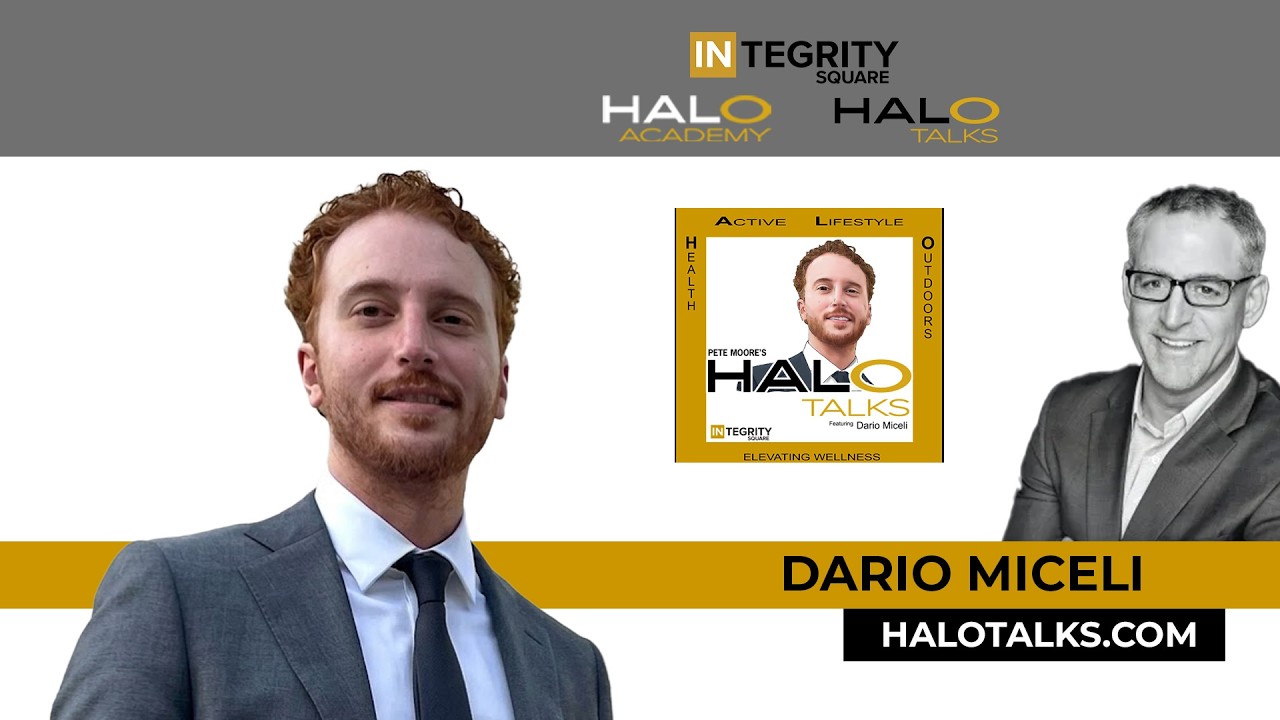
Dario Miceli on Building Padel Magazine and Growing Padel in America

A padel court can run $30,000 to $70,000 to build once you factor in engineering sign-off and municipal permits. There is no governing body setting the rules, no proven facility model, and barely any homegrown coaching talent. That combination sounds like a risk. To Dario Miceli, founder of Padel Magazine, it is the opportunity: a major racket sport still young enough in the US that the people building it get to write the playbook.
Pete Moore sits down with Miceli, a Brooklyn-based real estate investor turned magazine publisher, to unpack how padel is taking root in America, why its economics look nothing like pickleball's, and what operators and investors should understand before they build.
From Real Estate Investor to Padel Publisher
Miceli's path into padel started at Padel House in Williamsburg, Brooklyn, one of the sport's first US facilities, housed in a former nightclub. A private lesson turned into clinics, then regular play, then a network of players with stories no one was telling. Miceli, who still works full time as a real estate investor, launched Padel Magazine digitally and published a first print issue in March featuring, by his account, around 120 pages and 14 articles spanning Tokyo, London, Alicante, and New York.
Padel's "Wild West" Phase
Miceli describes the current US market as a DIY, Wild West moment: no blueprint, no hierarchy, no rulebook. Unlike a mature industry where a new entrant has to fight for share, padel's early stage means real room to shape how the sport gets built, priced, and franchised, from the ground up, in one of the world's largest active-lifestyle markets.
Why Padel's Unit Economics Look Different From Pickleball's
Pickleball scaled fast because it is cheap: paint some lines, put up a net, done. Padel is a different capital equation. Miceli cites a $30,000 to $70,000 per-court build cost, plus engineer sign-off, municipal permitting, and import logistics for court materials (complicated further, he notes, during periods of high tariffs). That higher barrier to entry is, in his view, the main reason institutional capital has been slower to arrive in padel than it was in pickleball, though he says private investors and venture funds focused on facilities, coaching, and app/AI camera technology are increasingly active, with meaningful institutional flow expected within roughly the next 18 to 24 months.
No Consensus Facility Model, Yet
Operators are experimenting without a proven template. Miceli points to a premium, club-like model (locker rooms, amenities, membership pricing) at one end and stripped-down courts dropped into unused urban space, no showers, minimal service, at the other. He flags three components he sees as durable regardless of format: food and beverage (which drives ancillary revenue and turns a facility into a social hub), multi-sport programming (pairing padel with pickleball, tennis, or casual hangout space), and wellness add-ons like cold plunge and sauna. No single model has yet proven itself the winner.
The Coaching Shortage Is the Real Bottleneck
Beyond real estate cost, Miceli names coaching as the sport's tightest constraint. The US has no homegrown padel coaching pipeline the way it does for tennis or baseball, so facilities import coaches, which brings housing and visa complexity. Some programs are converting former D1 tennis players into padel instructors as a stopgap, which Miceli calls a reasonable short-term fix but not a path to producing a US player ranked in the world's top 50 within the next decade. That, he argues, requires investment in youth development starting now.
A Spectator Sport in the Making
Miceli argues padel plays well on camera: four players on a small, walled court, fast-paced rallies, replay-friendly angles, and room for sponsor visibility. He references studies comparing rally length between top tennis and padel players, citing tennis rallies averaging under 5 seconds versus padel rallies approaching 10.
He points to Spain, Argentina, and Italy as the sport's most mature markets, describing Spanish neighborhoods where housing developments build padel courts instead of pools, with parents and kids treating court time the way Americans treat Little League.
Success Without a Scoreboard, Yet
Asked how he defines success at this stage, Miceli is candid: no sales metrics, no KPIs. His goal is ecosystem-building, getting more people to fall in love with the sport so they go start something adjacent: a racket company, an AI coaching tool, a consultancy, a new facility. He treats every reader and follower who reaches out with a business idea as a chance to advance that goal.
Key Takeaways for Operators, Franchisors, and Investors
1. Padel's high build cost is both the barrier and the moat. At $30,000 to $70,000 per court plus permitting, padel does not scale as cheaply as pickleball, which has kept institutional capital on the sidelines longer, but also raises the bar for new entrants once a proven model emerges (07:09).
2. There is no dominant facility model to copy yet. Premium club and stripped-down urban-court approaches are both being tested with no consensus winner, meaning early operators have latitude, and risk, in choosing a format (16:01).
3. Food and beverage, multi-sport programming, and wellness amenities are the ancillary revenue levers operators are betting on, even without a proven flagship facility model (16:01).
4. Coaching supply is the binding constraint on growth, more than real estate or capital. Operators planning facility buildout should budget for the cost and complexity of importing coaching talent, including visa and housing logistics (18:16).
5. Franchise disclosure documents (Item 19) in adjacent racket-sport categories have reportedly shown weak unit economics, per Miceli's account of pickleball franchise filings; operators should scrutinize published unit economics closely before buying into any racket-sport franchise concept (14:53).
6. Institutional capital is arriving, but not yet at scale. Private equity and venture interest is growing around facilities, coaching, and technology (apps, AI cameras), with Miceli estimating broader institutional participation within 18 to 24 months, an estimate, not a guarantee (07:09).
A Few Quotes Worth Sitting With
"You have housing developments that instead of having a pool in the middle, they have padel courts with grills around them. People want to raise their kids around this sport." - Dario Miceli
"If you treat people well and you treat people with respect and dignity, you won't have any regrets. Your business is going to succeed and fail with things beyond your control, but how you treat people, you'll be remembered forever that way." - Dario Miceli
Chapter Timestamps
- 00:00 Padel or paddle: the pronunciation debate
- 03:00 From real estate investor to magazine founder
- 05:15 Padel's Wild West phase in the US
- 07:09 Why padel's build costs slow institutional capital
- 14:53 Why franchise economics in racket sports are hard to pencil out
- 16:01 The search for a winning facility model
- 18:16 The US coaching shortage
- 21:00 Padel as a spectator sport
- 22:11 Defining success without a scoreboard
About Dario Miceli
Dario Miceli is the founder of Padel Magazine, a print and digital publication covering the global growth of padel. He works full time as a real estate investor and is based in Brooklyn, New York.
Resources
- Dario Miceli on LinkedIn: https://www.linkedin.com/in/dario-miceli-padel-magazine
- Padel Magazine: https://www.readpadelmag.com
- Integrity Square: https://www.integritysq.com
Want help sizing up an opportunity in padel, pickleball, or any other corner of the HALO sector? Visit integritysq.com to set up a free consultation.

Suburban Boutique Fitness Integration: How Drop Fitness Scales Multi-Brand Concepts