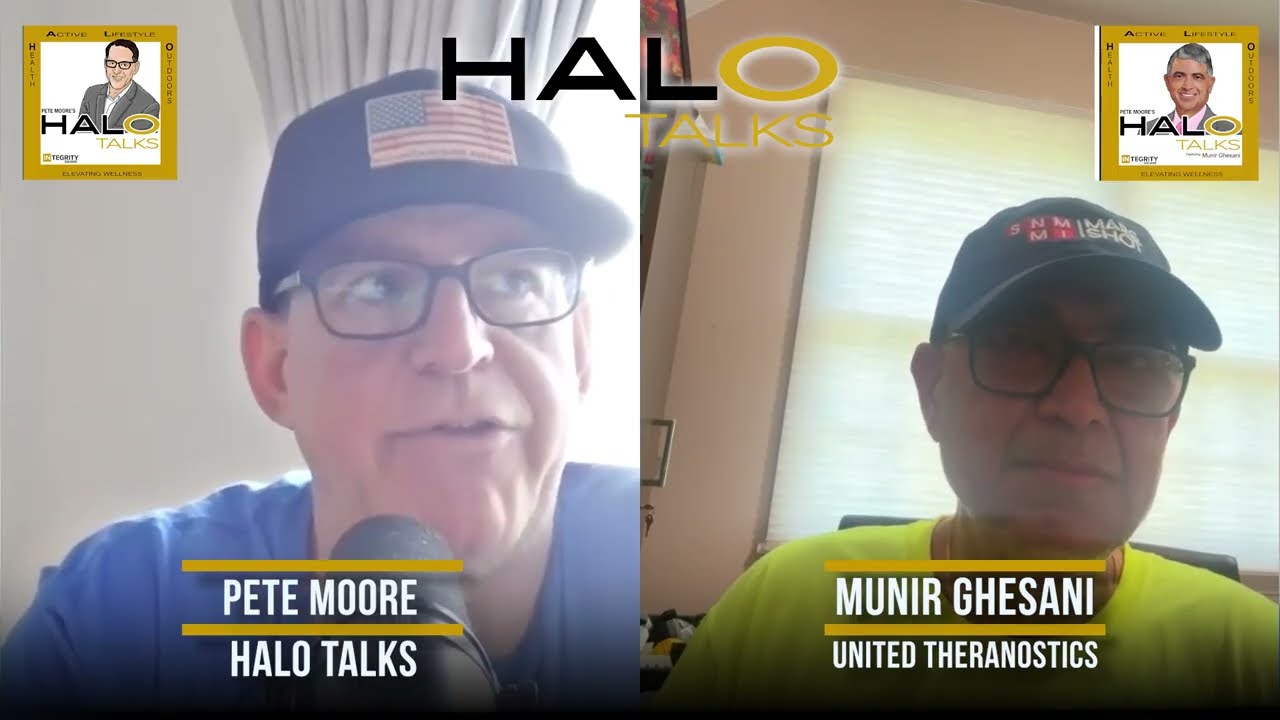
Dr. Munir Ghesani on Theranostics, Outpatient Access, and Scaling to 50 Clinics a State

United Theranostics has a stated goal of opening 50 clinics in every state within the next seven years, and it plans to get there almost entirely through recruiting, not acquisition. On this episode of HALO Talks, Dr. Munir Ghesani, Chief Medical Director at United Theranostics, explains why: theranostics is a heavily regulated, infrastructure-driven specialty, and he says you can't simply buy an existing radiology or oncology group and retrofit it.
Ghesani spent more than three decades in academic medicine in New York before joining United Theranostics as an outpatient practice two years ago, and in this conversation he walks through what theranostics actually is, how patients and referring physicians find their way into it, and why, in his telling, his academic output has grown since he made the jump to a commercial, high-growth business.
A note on this episode: Dr. Ghesani discusses medical treatment, insurance coverage, and clinical trial mechanics based on his own professional experience. This reflects his opinion and should not be read as medical or financial advice. Integrity Square recommends consulting a qualified professional for guidance specific to your situation.
From 32 Years in Academic Radiology to Chief Medical Director at United Theranostics
Ghesani says he spent 32 years in academic practice across various universities in New York, working in clinical trials and clinical care while reading and reporting scans. He describes academic and private practice as two different worlds: academic medicine, in his telling, can lose sight of patient access, while private practice can lose the academic rigor. He says that tension is what pushed him to make a change two years ago, when he met the founders of United Theranostics and decided to join their outpatient practice.
He's careful to note the move wasn't a retreat from academics. "In fact, if you look at my CV over the last 2 years, I have been more academically productive than ever before," he says, adding that United Theranostics keeps him and his colleagues front and center on patient access without sacrificing academic pursuits, including publishing and presenting at society meetings.
What Theranostics Actually Means: "We Treat What We See, and We See What We Treat"
Asked to define the term in simple language, Ghesani contrasts theranostics with standard chemotherapy or immunotherapy, where a clinician may run genetic tests beforehand but has limited visibility into how an individual patient will respond once treatment starts. Theranostics, he says, starts with a personalized scan before any treatment is administered, then confirms after treatment that it actually reached the targeted sites.
He compares it to custom tailoring versus off-the-shelf clothing: a scan-first, treatment-second, verify-third loop built around the individual patient rather than population averages. "We treat what we see. And we see what we treat," is how he sums it up. He says few other treatment modalities in medicine offer this level of personalization and confirmation, calling out maybe one or two exceptions.
How Patients and Physicians Find Their Way Into Theranostics
Ghesani describes two main referral paths. The first is direct patient awareness: United Theranostics tries to make sure patients know theranostics is an option even if their own doctor hasn't raised it. The second, and larger, path is physician referral, primarily from medical oncologists, urologists, radiation oncologists, and sometimes primary care physicians who are already aware of the service. Hospitals also refer patients directly.
The driver behind hospital referrals, he says, is distance. Major academic cancer centers sit in major metros, but he cites a statistic that roughly 80% of cancer care is delivered in a community setting (guest-stated, not independently verified). When patients living 50 to 60 miles from an academic center push back on multiple three-hour round trips, hospitals point them toward a nearby United Theranostics site instead, often 10 to 20 minutes away.
Serving Two Audiences: Physicians and Patients
Asked whether United Theranostics is building a referral pipeline for physicians or a consumer brand, Ghesani says it's deliberately both. Drawing on his experience as a former program director of radiology training, he says radiologists have to serve two constituents: the patient, and the referring physician. United Theranostics tries to reduce the burden on referring physicians by managing more of the care itself, including treating side effects rather than sending patients back to their referring doctor for follow-up.
The goal, he says, is for referring physicians to see United Theranostics as a partner in patient care rather than a one-way referral service, which in turn makes physicians more willing to keep sending patients.
Why the Hospital Hub-and-Spoke Model Breaks Down for Theranostics
Ghesani draws a contrast with surgery centers, where academic hospitals successfully run a hub-and-spoke model: simple procedures happen at satellite sites, complex ones route to the main hospital. He says that model doesn't translate to theranostics because the infrastructure, regulatory requirements, and specialized staffing needed are too heavy to replicate across many satellite locations. Academic institutions end up concentrating theranostic services at a single hub, even as they offer virtual visits and satellite access for everything else.
That mismatch, he says, is exactly what pushes patients to look elsewhere and find a nearby United Theranostics site instead, which is why the majority of United Theranostics locations are in suburban areas rather than major metros, aligned with the earlier point about where cancer care is actually delivered.
Scaling to 50 Clinics a State Without Acquiring Existing Practices
Pete Moore raises United Theranostics' publicly stated growth plan of 50 clinics in every state within seven years and asks how that works from a staffing and recruiting standpoint. Ghesani says the company does not acquire existing radiology or oncology practices, because the infrastructure and regulatory clearance required are too specific to retrofit into an existing operation.
Instead, growth comes through recruiting: presenting data at society and organization meetings, building a reputation for a distinctive patient-follow-up model, and attracting residents nearing graduation along with younger physicians who want to build a career in an independent, outpatient theranostics model.
Clinical Trials as an Unexpected Growth Engine, and Knowing When to Say No
One surprise Ghesani flags in moving from academia to a commercial, high-growth business: clinical trials turned into a bigger driver than expected. He says United Theranostics currently runs 22 active clinical trials (guest-stated, not independently verified), and patients are increasingly finding those trials and traveling, sometimes from across the country, when a treatment is only offered at two or three sites nationally.
He explains that trial treatments are not FDA-approved for general use, though FDA does clear the trial itself before it's offered to patients. Because Medicare and Medicaid coverage generally requires FDA approval, and most private insurers benchmark off Medicare and Medicaid, Ghesani says close to none of the trial costs are covered by insurance: they're funded by the drug companies running the trials.
United Theranostics also has to say no. Ghesani describes a standing internal committee that reviews every proposed trial for supporting data and adverse-effect risk, and that also weighs whether a new trial would compete with an existing commitment to a drug company for patient enrollment. "We meet on a regular basis, we discuss this routinely," he says of the review process.
Key Takeaways for Operators, Franchisors, and Investors
-
Theranostics closes a loop most treatment modalities don't: scan first, treat, then confirm the treatment reached its target. That closed-loop, personalized model is central to how United Theranostics differentiates itself clinically and commercially. (05:07)
-
Roughly 80% of cancer care is delivered in a community setting, according to Ghesani (guest-stated, not independently verified). Site selection follows that pattern: United Theranostics builds mostly in suburban locations rather than major metros. (07:53)
-
Growth is being driven by physician partnership as much as patient acquisition. United Theranostics absorbs post-treatment burden, like managing side effects, to keep referring physicians actively sending patients rather than treating the relationship as a one-time handoff. (10:05)
-
A hub-and-spoke model that works for lower-acuity services like elective surgery does not translate to infrastructure- and regulation-heavy specialties. That's a distinction worth testing against your own service line before assuming a satellite strategy will scale. (12:23)
-
United Theranostics' stated target is 50 clinics per state within seven years (referenced during the interview, not independently confirmed), built entirely through recruiting from academic institutions rather than acquiring existing practices, because the regulatory and infrastructure requirements are difficult to retrofit. (14:29)
-
Clinical trials (22 currently active, guest-stated) are functioning as an unplanned growth and retention channel, drawing patients nationally when a trial is only available at a handful of sites, and are funded by drug companies rather than insurance. (18:28)
A Few Quotes Worth Sitting With
"We treat what we see. And we see what we treat."
- Dr. Munir Ghesani
"It is such a unique infrastructure-driven enterprise that it's not so easy to acquire, retrofit, and then train the staff."
- Dr. Munir Ghesani
Chapter Timestamps
- 00:01: Introduction: theranostics, patient access, clinic rollouts, and financing
- 00:46: Dr. Ghesani's path from 32 years in academic radiology to United Theranostics
- 05:07: What theranostics actually means, explained through a tailoring analogy
- 07:32: How patients and referring physicians find their way into the theranostics ecosystem
- 10:05: Serving two audiences at once: referring physicians and patients
- 11:31: The hospital hub-and-spoke model, and where it breaks down
- 14:29: The stated plan to open 50 clinics per state within seven years
- 18:28: Clinical trials as an unexpected growth driver, with 22 currently active
- 20:24: How clinical trials are funded and why most insurance won't cover them
- 22:47: The internal committee process for deciding when to say no to a trial
About Dr. Munir Ghesani
Dr. Munir Ghesani is Chief Medical Director at United Theranostics, an outpatient private theranostics group. Per the episode, he spent 32 years in academic medical practice across universities in New York, including work in clinical trials and clinical care, and previously served as a program director of radiology training. He joined United Theranostics roughly two years before this episode was recorded (as of August 2026). He describes himself as a lifelong New Yorker and Knicks fan.
Resources
Related HALO Talks Episodes
- Episode #590: Inside NOVOS, How Chris Mirabile and Top Scientists Approach the Longevity Movement
- Episode #600: Inside Ola Capital, Richie Hansen's Move from Endurance Sports to Healthy Aging Investments
- Episode #546: From Patents to Practice, Leonhardt's Innovations in Healthspan and Regenerative Wellness
Want help scaling a healthcare or HALO-sector business toward institutional growth capital or a strategic exit? Visit integritysq.com to set up a free consultation with Integrity Square.
Suburban Boutique Fitness Integration: How Drop Fitness Scales Multi-Brand Concepts