How CR Fitness Became Crunch's Largest Franchisee: Tony Scrimale on Ownership Mentality, Private Equity, and the Arizona Expansion

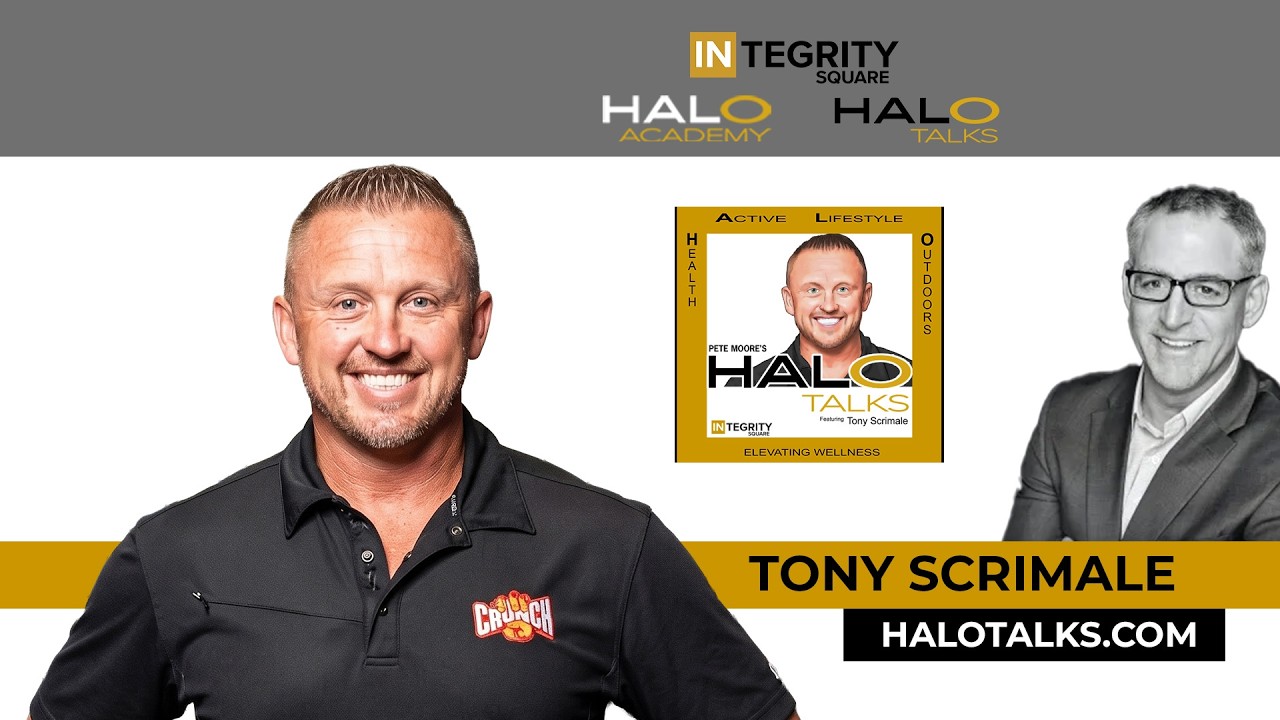
Tony Scrimale started in the gym business the way a lot of the best operators do: broke, 18 years old, and spending three to four hours a day at a Florida health club he wasn't even employed by yet. Almost thirty years later, he's CEO of CR Fitness Holdings, the largest Crunch Fitness franchisee in the country, running more than 90 clubs across five states with over a million members and a $350 million growth investment from Sixth Street behind him.
In this conversation with Pete Moore, Scrimale walks through the whole arc: getting hired at a Bradenton, Florida gym because he refused to stop showing up, the moment a new owner named Vince Julien changed the direction of his career, and the leadership philosophy he built around a single regret from his baseball days. From there, the conversation turns operational: how CR Fitness balances high-volume, low-price economics with old-school relationship selling, what it's actually like to bring on institutional capital without losing control of the business, and why Scrimale says no to growth opportunities just as often as he says yes.
For operators, franchisees, and investors watching the HVLP fitness category consolidate, this is a rare look inside how the category's biggest Crunch operator thinks about discipline, brand fit, and where it's placing its next bet: Phoenix, Arizona.
Want help thinking through your own growth, recapitalization, or exit strategy? Integrity Square works exclusively with HALO sector operators on M&A, capital raises, and strategic advisory. Visit integritysq.com/ISQ to see our capabilities deck and set up a consultation.
Key Takeaways for Operators and Franchisees
- Ownership mentality has to be trained before the title arrives. Scrimale tells candidates directly: if you're not picking up trash in the parking lot or fixing what you notice while you're just an employee, you're not conditioning the habits you'll need once you actually own something.
- HVLP economics don't eliminate the need for relationship selling, they compress it. Where a membership sale used to take an hour of assessment and rapport-building, CR Fitness now works with a two-minute window to capture attention and differentiate from every other gym with the same equipment and the same four walls.
- Private equity capital should follow proof, not precede it. Before CR Fitness brought on institutional investors, the team validated same-store sales consistency, the ability to turn around an acquired competitor's numbers, and the ability to successfully integrate another franchisee's operations. All three had to check out first.
- Saying no protects the brand more than saying yes grows it. Scrimale's board, stocked with three former CEOs, exists partly to slow him down. His rule of thumb: don't chase a feature or amenity just because a competitor has it if it doesn't reinforce what your brand is actually known for.
- Absorbing large acquisitions tests infrastructure, not appetite. CR Fitness closed a nine-club, single-transaction acquisition of 24 Hour Fitness locations in Florida that wasn't even in its annual growth plan. Scrimale rates the integration a 9.5 out of 10, but the real takeaway is that the team had already built the bench strength to handle it.
- Brand fit is a filter, not a formality, when evaluating where to grow. Scrimale is explicit that he wouldn't bring the same energy to every brand in the category. Entering a new market like Phoenix only made sense because the brand identity, not just the unit economics, was a fit.
In This Episode
- 01:20, Growing up in upstate New York and moving to Florida to chase a baseball career
- 03:36, How a gym manager talked an 18-year-old into his first job in fitness
- 06:17, The day Vince Julien bought the club and changed Scrimale's career path
- 07:25, The baseball regret that shaped his leadership philosophy
- 09:43, Why ownership mentality has to be built before you're an owner
- 11:19, Ground-level experience versus "ivory tower" decision-making
- 13:04, HVLP economics, the two-minute pitch, and relationship selling at scale
- 17:14, Private equity, non-recourse capital, and playing chess instead of checkers
- 19:47, How CR Fitness decides when to say no to growth
- 22:43, The Dunkin' analogy: fitting a brand versus chasing its AUVs
- 25:34, Crunch's evolution from 1.0 to 3.0 and why franchise flexibility matters
- 28:42, Inside the North Castle Partners and Sixth Street investment
- 30:06, Why Phoenix is CR Fitness's next frontier
From Gym Rat to Gym Owner
Scrimale's path into the industry didn't start with a business plan. It started with a failed baseball tryout. He moved to Bradenton, Florida at 18 expecting to walk onto a college team the way he had in upstate New York, where he was throwing 85 to 86 miles per hour as a senior. What he didn't account for was that Florida programs recruit and set their rosters a year in advance, and the players he was competing against were throwing in the mid-90s.
With baseball off the table, he did the only other thing he knew: he worked out, every day, for three to four hours at a time, at a club called Bradenton Spa. The gym manager eventually asked the obvious question. As Scrimale tells it, she said, "why don't you work here? You're here every single day."
That job started as unpaid membership sales on commission, in an era before high-volume, low-price gyms existed. Scrimale describes it as a genuinely relationship-driven business: hour-long assessments, full circuit walkthroughs, and members who'd specifically ask for him by name.
The turning point came when the gym's original owner passed away and the property ownership took over the club without a clear operator in place. Vince Julien, now Scrimale's longtime partner and mentor, bought the gym and laid down one condition on the spot: no ball cap, always wear white sneakers, and there'd be a job and mentorship waiting. Scrimale was 19. Within six months, he'd given up on baseball entirely and committed to the fitness industry as a career.
The Moment That Built an Ownership Mentality
Scrimale traces a lot of his drive back to a specific regret. Looking back on his baseball career, he realized he'd never actually given tryouts everything he had, despite being team captain. That realization became a personal operating principle he still teaches his team:
"No matter what it is in my life, if I have an opportunity and I'm good at something, I'm going to give it everything I got because I don't want to look back and have regrets like I did in my baseball career."
That philosophy shows up directly in how CR Fitness evaluates people who say they want to be owners someday. Scrimale's test isn't ambition, it's behavior on the floor right now.
"If you don't start having that ownership mentality from the get-go, even if it is your dream someday, all you're doing is setting yourself up to not succeed down the road because you're not conditioning the habit and the skillset that you need if you were an owner."
Balancing HVLP Economics With Relationship Selling
CR Fitness operates in the high-volume, low-price segment, the same category where Crunch, Planet Fitness, and most of the industry's fastest-growing brands now compete. Scrimale is candid that HVLP has compressed what used to be an hour-long sales process into roughly a two-minute window to capture a prospect's attention before a value-based tour.
The challenge he points to isn't closing the membership itself, since most people who walk in already intend to join. It's converting that member into someone who's genuinely sold on the brand rather than just the price, so they refer friends and stay loyal. With recovery zones, hot yoga, Pilates studios, and other amenities now standard, Scrimale argues one of the industry's biggest gaps is simply introducing members to services they don't know they have access to.
He also draws a clear line between operators who came up through the gym floor and those who parachute in from unrelated retail or hospitality backgrounds:
"People can try to dissect this business, you know, many different ways. You can sit up there in that ivory tower. Talk to my partner Geoff Dyer. Like, where the rubber meets the road is in the clubs, right?"
Private Equity: Non-Recourse Capital and Playing Chess Instead of Checkers
CR Fitness self-funded its early growth before bringing on institutional capital. Scrimale describes the appeal of private equity less as a funding necessity and more as a way to remove personal liability, since a founder no longer has to personally guarantee leases, debt, or franchise agreements once outside capital and a formal structure are in place.
Before pursuing that capital, the team built a track record across three specific dimensions: consistent same-store sales growth, the ability to acquire a competitor's locations and improve their numbers, and the ability to acquire and integrate another Crunch franchisee. Only after checking all three boxes did CR Fitness move forward with outside investors, according to Scrimale.
That discipline was tested directly last year, when CR Fitness closed on nine Florida locations acquired from 24 Hour Fitness in a single transaction, a deal Scrimale says wasn't even part of the year's original growth plan. He rates the integration at 9.5 out of 10.
Knowing When to Say No to Growth
Scrimale describes himself as the partner who wants to say yes to every opportunity. He credits his board, which includes North Castle Partners along with former CR Fitness CEOs, with providing the discipline to pump the brakes when needed.
His filter for evaluating new markets or new services centers on brand identity rather than simply chasing what competitors offer. He points to smaller-population "B markets" as an example: the team has to model out whether returns hold up before committing, even when the broader pro forma supports moving forward.
The same logic applies to product decisions. Scrimale argues that trying to match every feature a competitor rolls out, rather than doubling down on what a brand is already excellent at, is where operators lose their identity and where he's most likely to say no.
Why Brand Fit Matters More Than Copying Competitors
Asked to compare Crunch's evolution to other brand turnarounds he's watched in franchising, Scrimale points to Crunch's willingness to genuinely evolve its look and positioning, what the organization refers to internally as its 1.0, 2.0, and 3.0 iterations, as a rare trait among franchise systems that have been operating for over a decade.
He credits Crunch's franchisor leadership for giving operators room to adapt store design, layout, and amenities rather than locking franchisees into a rigid template. He's also an active mystery shopper of sorts: he describes regularly paying day-use fees to walk competitor and non-competitor gyms alike, including a recent visit to Crunch's own corporately owned Chelsea location in Manhattan to see its renovation and new recovery offerings firsthand.
Inside the North Castle Partners and Sixth Street Transaction
CR Fitness's capital structure includes North Castle Partners, a private equity firm focused on health and wellness that led a majority investment in the business in 2019 and recapitalized it again in 2022. In October 2025, Sixth Street made a $350 million strategic growth investment in CR Fitness, with North Castle Partners remaining the company's largest shareholder and Golub Capital providing a new senior debt facility.
Scrimale frames the partnership as additive rather than disruptive, noting that the deal didn't come with a mandate to change how the business runs. His characterization of the arrangement: more minds in the boardroom, the same leadership team and playbook already in place, and additional capital to accelerate a growth plan that was already working.
What's Next: CR Fitness Heads to Phoenix
CR Fitness is expanding into the Phoenix, Arizona market for the first time, entering one of the most competitive gym markets in the country against established operators like Mountainside Fitness and EOS Fitness. Scrimale says the population growth and consumer appetite for options made the market worth the risk, and he's personally relocating a second home to the area to be hands-on for the launch.
About Tony Scrimale
Tony Scrimale is CEO of CR Fitness Holdings, LLC, the largest Crunch Fitness franchisee in the United States, operating more than 90 clubs across Florida, Georgia, North Carolina, Tennessee, and Texas, with a new Phoenix, Arizona expansion underway in 2026. Scrimale began his career in 1997 as a membership salesperson at a Florida health club and was named CEO of CR Fitness in January 2022.
He co-founded the company with Vince Julien and Jeff Dotson, opening the group's first Crunch location in 2012. Under his leadership, CR Fitness has grown from roughly 35 clubs in 2022 to more than 90 today, surpassing one million members in early 2026. In 2025, North Castle Partners named Scrimale its CEO of the Year.
Connect with Tony: LinkedIn
Resources
- CR Fitness Holdings: LinkedIn
- Promotion Vault: promotionvault.com
- HigherDOSE: higherdose.com
- Related episode: Episode #530, Future of Crunch: CR Fitness Expansion, Innovative Offerings, and Operational Strategy
- Related episode: Keith Worts, CEO of Crunch
- Related episode: Assaf Gal, Crunch Fitness Franchisee
Escrow vs Rep and Warranty Insurance in HALO M&A Deals