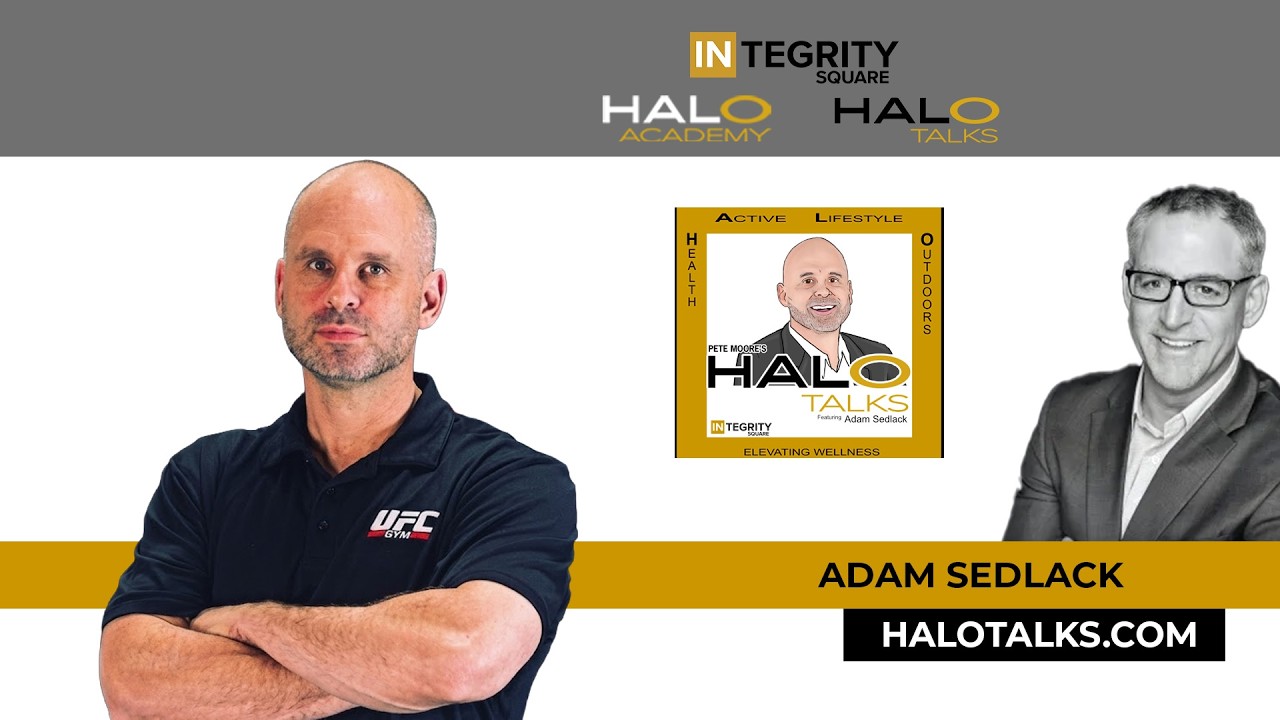
UFC Gym's Asset-Light Franchise Playbook: CEO Adam Sedlack on HALO Talks
UFC Gym's Asset-Light Franchise Playbook: CEO Adam Sedlack on HALO Talks
Most fitness brands that hit a cash crunch tend to go straight to Chapter 11. UFC GYM did the opposite. In this return visit to HALO Talks, CEO and co-founder Adam Sedlack walks host Pete Moore through how the brand restructured during COVID without filing for bankruptcy, why it went fully asset-light and franchise-focused, and how it is now opening close to one gym a week across 48 countries.
If you operate, franchise, or invest in the HALO (Health, Active Lifestyle, Outdoors) sector, this is a practical conversation about distressed restructuring, franchisee selection, and low-capital expansion. Listen above, or read the recap below.
A return guest, and a very different company
Adam last sat down with Pete back on Episode 114 in 2019,(link below), before COVID reshaped the industry. A lot has changed since. Sedlack co-founded UFC GYM in 2008 alongside Mark Mastrov (now Executive Chairman) and stepped into the CEO seat in 2021. The brand he runs today looks almost nothing like the one from that first interview.
From five corporate gyms to a global franchise system
UFC GYM began as a joint venture built to test and run roughly five gyms. The early results were strong enough that the question quickly shifted from "does this work" to "how do we scale it globally." That pushed the company into franchising.
When UFC GYM acquired a franchise system to get there, it came, in Sedlack's words, with "a little bit of hair." The brand was now managing two very different formats at once: large signature clubs in the 35,000 to 45,000 square foot range, and a much smaller acquired format closer to 2,500 to 3,000 square feet. Integrating those was the first real test of the franchise model.
The COVID call: Restructure without Chapter 11
When COVID hit, the pressure landed hardest on UFC GYM's corporate-owned locations, many of them in California and Hawaii, where rent and payroll liability piled up fast. Sedlack says the team seriously weighed a Chapter 11 reorganization.
They chose a different path. UFC GYM sold corporate locations to well-capitalized franchisees and used the proceeds to clear rent liability, pay vendors, and retire debt. The goal, Sedlack says, was to protect two things above all: the integrity of the UFC brand, and the franchisees who had bought in for the right reasons.
Pete used the moment to break down what Chapter 11 actually means for operators in the audience. A reorganization can freeze vendor and lease payments and let a company cherry-pick which leases to keep, but it also puts the business "in play," exposing it to a 363 asset sale where someone else can try to buy it out from under you.
Just as important for a franchisor: filing can read as failure to consumers and can hand franchisees an argument that the franchisor is insolvent. As Sedlack put it, the franchise side was never the problem. The asset-light franchise business carried low liability. It was the corporate division's rent obligations that created the squeeze.
Where UFC GYM is today
Coming out the other side, the company is asset-light and effectively 100 percent franchise-focused. Sedlack says UFC GYM is now developing in 48 countries, opening roughly one gym per week, and targeting closer to 1.5 per week next year, with its strongest performance in the 30,000 to 40,000-plus square foot model. On the cap table, Mastrov retains a majority stake, and the business runs on a royalty-centric model with low liabilities and no debt.
A new small-box bet: UFC GYM Jiu Jitsu
The newest concept is UFC GYM Jiu Jitsu: small studios in the 2,000 to 3,000 square foot range, built for owner-operators. The logic is simple. You would never drop a 50,000 square foot signature club into a town of 30,000 people, but a black belt who wants to own a business can make the math work on a low-cost build-out with low rent. UFC GYM is giving its international partners the rights to add the concept to their Master Territory Agreements (MTAs) as the Jiu Jitsu vertical continues to grow.
Building systems so "average teams get good results"
A recurring theme: you cannot scale a franchise that depends on "heroics." Historically, Sedlack notes, the industry needed a great team to get good results. The aim now is to build operating manuals and automation so an average team can perform well. UFC GYM leans on tools like Club Connect, full CRM systems, and AI to create the checks, balances, and predictability a global system needs. Build it too complicated, and you stay people-reliant and cannot scale.
How UFC GYM picks franchisees
Sedlack's franchisee screen comes down to two boxes that both have to be checked: capital and passion. Plenty of candidates love the brand but lack the capital, and plenty have deep pockets but treat it as a purely transactional play. His instinct is often to marry the two together. The biggest trap door he warns against is over-leverage. Structure a deal at 90 percent debt, he says, and it does not matter how good an operator you are. The debt will swallow you.
Conversions and landlord partnerships as growth levers
Two expansion paths stood out for independent operators thinking about succession or a brand change. First, conversions: rebranding an aging facility into a UFC GYM can save six to twelve months versus a greenfield build and comes with an existing membership base. Because UFC GYM is "a gym first," with a roughly 30,000 square foot average workout floor, it can slot into existing boxes and lift average revenue per member with its MMA and group programming.
Second, a management-services model. Sedlack says landlords are increasingly calling him directly: they want to own the franchise but not operate it. UFC GYM will build out and run the gym A to Z, with the landlord participating on both the gym's profit and the rent. He says the company has opened three of these in the past six months.
Co-branding and the future of gym sponsorship
Pete floated a forward-looking idea: with the foot traffic a busy club generates, how long until a beverage brand or similar sponsor wants its name on the building, the way arenas sell naming rights? Sedlack sees real opportunity, with one caveat for UFC GYM specifically: any deal would need to align with existing UFC sponsors. Beyond signage, he sees room in member communications, contests, and other touchpoints.
Key takeaways for HALO operators and investors
- Asset-light can be a survival strategy, not just a growth one. Selling corporate boxes to capitalized franchisees and clearing liabilities is a credible alternative to a bankruptcy filing.
- Avoiding Chapter 11 protected brand equity and franchisee confidence. For a franchisor, the optics of insolvency carry real contractual risk.
- Screen franchisees on capital and alignment, not one or the other. When a candidate has only one, consider pairing capital partners with passionate operators.
- Watch leverage. Over-leveraged deals fail regardless of operator quality.
- Conversions and landlord-operated deals shorten the path to scale. Both can be faster and lower-risk than greenfield development.
- Small-box, owner-operator concepts open markets large clubs cannot serve. UFC GYM Jiu Jitsu is the test case.
In their words
On scaling through systems: Sedlack wants a model where "average teams can perform very well," rather than one that only works with a great team in every seat.
On leverage: structure a deal with too much debt and "the debt's going to swallow you up."
Chapters
- 00:00 Reunion and "take two" since Episode 114
- 01:06 The pre-COVID starting point
- 02:31 Getting into franchising (and acquiring "a little hair")
- 03:43 COVID hits and the restructuring decision
- 05:32 Going asset-light without Chapter 11
- 06:12 Today: 48 countries and roughly a gym a week
- 07:03 The UFC GYM Jiu Jitsu small-box concept
- 08:34 Pete's explainer: Chapter 11, 363 sales, and perception
- 13:09 Ownership and the post-COVID cap table
- 15:32 Running a 24/7 global franchise on systems and automation
- 18:14 How to evaluate franchise candidates
- 22:06 Co-branding and the future of gym sponsorship
- 24:46 Conversions and landlord management deals
- 28:53 Closing thoughts on community and communication
About Adam Sedlack and UFC GYM
Adam Sedlack is CEO and co-founder of UFC GYM, the first major brand extension of UFC. He co-founded the concept in 2008 with Mark Mastrov, who now serves as Executive Chairman, and was promoted from President to CEO in 2021. Sedlack has roughly three decades in the fitness industry, including about 17 years working alongside Mastrov at 24 Hour Fitness before launching UFC GYM. The brand operates and is developing in dozens of countries worldwide.
Resources mentioned
- Integrity Square: https://www.integritysq.com
- UFC GYM franchising: https://ufcgymfranchise.com
- Promotion Vault: https://www.promotionvault.com
- HigherDose: https://www.higherdose.com
Related episodes you'll enjoy
- Adam Sedlack's first HALO Talks appearance (Episode 114)
- Todd Wadler, CEO of TITLE Boxing Club and co-founder of BoxUnion (franchising deep dive)
Listen and connect
Listen to the full episode of HALO Talks above, then subscribe wherever you get your podcasts so you do not miss the next conversation. If you are building, buying, or selling in the HALO sector, connect with the team at Integrity Square at integritysq.com.

Amanda Guarniere of GuardianMD on Med Spa Compliance, Peptides, and Picking a Niche